


 by Workfile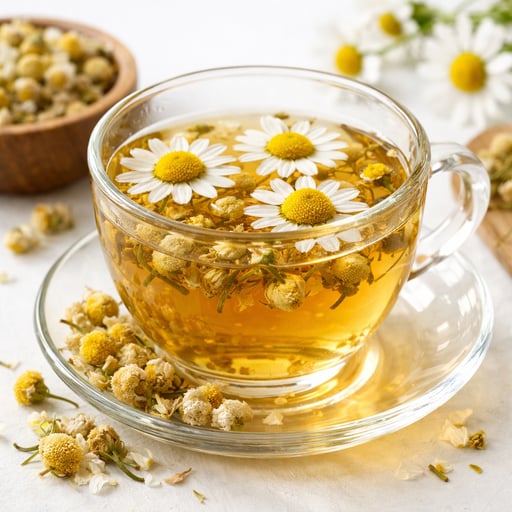
Chamomile Tea
कैमोमाइल चाय
A mild herbal tea made by infusing dried chamomile flowers in hot water, popular as a soothing caffeine-free drink.
Nutrition per 100ml
Nutrient Breakdown
% DV = % Daily Value (adult RDA, ICMR 2020). Values per 100ml edible portion.
Use Chamomile Tea in meal plans
17,000+ foods with real-time nutrient tracking, AI generation, and WhatsApp sharing.
Start FreeFree plan · No credit card
Common questions about Chamomile Tea
How many calories are in 1 cup (150ml) of Chamomile Tea?
1 cup (150ml) (150 ml) of Chamomile Tea has about 2 kcal, based on 1 kcal per 100 ml.
Is chamomile tea suitable for vegans?
Yes, chamomile tea is made from plant flowers and water, making it entirely suitable for vegan diets.
How is chamomile tea typically prepared?
It is prepared by steeping dried chamomile flowers or tea bags in hot water for several minutes, then straining before drinking.
Does chamomile tea contain caffeine?
No, chamomile tea is naturally caffeine-free as it is a herbal infusion, not made from tea leaves.
About Chamomile Tea
Chamomile tea is an aromatic herbal infusion prepared by steeping dried flowers of the chamomile plant in hot water. Widely consumed in India and globally as a calming beverage, it is naturally caffeine-free and enjoyed for its gentle floral flavor.
It contains negligible calories, fats, proteins, and carbohydrates, making it a virtually calorie-free drink. Trace amounts of minerals like calcium, iron, and potassium are present but in minimal levels. Chamomile tea does not contain vitamin B12 or vitamin D as it is plant-based. The tea may have a very small amount of vitamin A and folate, but these are not nutritionally significant.
It is suitable for vegans and those avoiding caffeine and is often consumed at any time of day, especially in the evening or before bedtime. The tea is typically served plain or with honey/sugar added separately, which would alter its nutritional profile.
Values per 100ml edible portion.
Nutrition data is for reference only. Values may vary by preparation method, brand, and region. Full disclaimer
Similar foods
Browse all →
Beverages, tea, herb, brewed, chamomile
कैमोमाइल चाय
Hot Tea
गरम चाय
Beverages, tea, herb, other than chamomile, brewed
Ginger Herbal Tea
अदरक हर्बल चाय
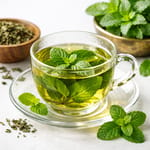
Peppermint Tea
पुदीना की चाय
Tea leaf
Tea, herbal, infusion
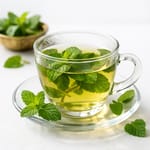
Spearmint Tea
स्पर्मिंट चाय