


 by Workfile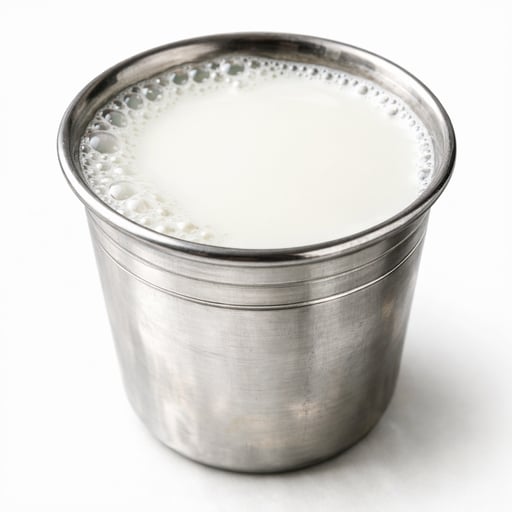
Milk Whole
पूर्ण वसा दूध
Whole milk is fresh cow milk containing its natural fat content, commonly consumed in India as a beverage or used in cooking and tea.
Nutrition per 100ml
Nutrient Breakdown
% DV = % Daily Value (adult RDA, ICMR 2020). Values per 100ml edible portion.
Use Milk Whole in meal plans
17,000+ foods with real-time nutrient tracking, AI generation, and WhatsApp sharing.
Start FreeFree plan · No credit card
Common questions about Milk Whole
How many calories are in 1 glass (~200ml) of Milk Whole?
1 glass (~200ml) (200 ml) of Milk Whole has about 146 kcal, based on 73 kcal per 100 ml.
How much protein is in Milk Whole?
Milk Whole provides about 3.3 g of protein per 100 ml.
In what ways is whole milk commonly used in Indian cuisine?
Whole milk is consumed as a beverage, in tea, and used in cooking sweets and gravies.
Is whole milk suitable for vegetarian diets?
Yes, whole milk is a vegetarian food but not vegan, as it comes from animals.
How should whole milk be stored to maintain freshness?
It should be refrigerated and consumed within a few days of opening to keep it fresh.
About Milk Whole
Whole milk is the natural juice of the dairy cow, usually pasteurized and sometimes homogenized, retaining about 3.5-4% fat content. It is widely consumed across India as a drink and is a base ingredient for many Indian dishes and teas.
Nutrition highlights include:- Contains moderate fat and protein content providing energy.- Provides calcium and vitamin B12, important for bone health and blood cell formation.- Naturally has lactose (milk sugar), which gives it a mildly sweet taste.
Milk is a vegetarian food and an important dietary staple. It is typically stored refrigerated and consumed fresh or boiled. While it contains no dietary fiber, it offers vital micronutrients such as potassium, zinc, and small amounts of vitamin A and D. Dairy allergy should be considered for sensitive individuals.
Values per 100ml edible portion.
Nutrition data is for reference only. Values may vary by preparation method, brand, and region. Full disclaimer
Similar foods
Browse all →Whole mare's milk
Milk, evaporated, whole
Milk, powder, whole
Milk, whole, UHT
Whole sheep milk
Milk, whole, pasteurised
Milk, condensed, whole, sweetened