


 by Workfile
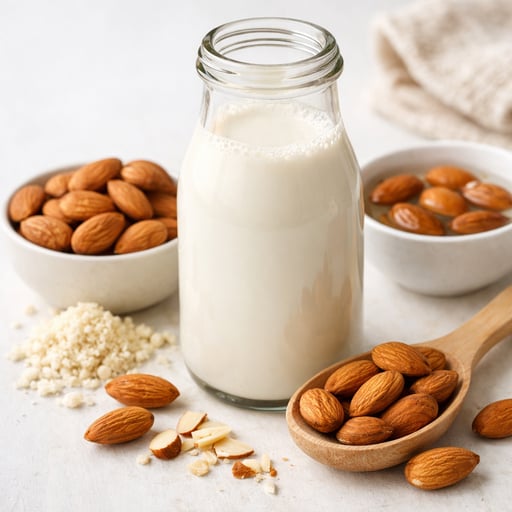
Almond Milk
बादाम दूध
Almond milk is a plant-based milk alternative made by blending almonds with water and straining the mixture. Commonly consumed by vegans and lactose-intolerant individuals, it has a mild nutty flavor and low calorie content.
Nutrition per 100ml
Nutrient Breakdown
% DV = % Daily Value (adult RDA, ICMR 2020). Values per 100ml edible portion.
Use Almond Milk in meal plans
17,000+ foods with real-time nutrient tracking, AI generation, and WhatsApp sharing.
Start FreeFree plan · No credit card
Common questions about Almond Milk
How many calories are in 1 glass (~200ml) of Almond Milk?
1 glass (~200ml) (200 ml) of Almond Milk has about 30 kcal, based on 15 kcal per 100 ml.
How much protein is in Almond Milk?
Almond Milk provides about 0.6 g of protein per 100 ml.
What are some culinary uses for almond milk?
Almond milk can be used as a dairy milk substitute in smoothies, cereals, and baking. It's also popular in coffee drinks and can be flavored for desserts.
Is almond milk suitable for vegans?
Yes, almond milk is a plant-based beverage and is suitable for vegans as it contains no animal products.
How should almond milk be stored?
Almond milk should be stored in the refrigerator and consumed within a few days after opening, or according to the expiration date if unopened.
What should I consider when selecting almond milk?
When selecting almond milk, consider whether you prefer unsweetened or sweetened varieties and check for added ingredients like stabilizers or flavorings.
About Almond Milk
Almond milk is a popular dairy-free beverage made by soaking and blending almonds with water, then straining the mixture to produce a smooth, nutty-flavored milk substitute. It originated as a lactose-free alternative for those avoiding cow's milk and is now widely available both commercially and homemade.
- Often used in cereals, beverages, and cooking, almond milk provides a creamy texture with fewer calories and fat compared to dairy milk.
- While it contains minimal natural protein and fat, it is commonly fortified with calcium and vitamins to enhance nutritional value.
- It is naturally free from lactose, cholesterol, and animal products, making it suitable for vegan and lactose-intolerant diets.
- Being a liquid, almond milk is typically consumed as a drink or added to recipes as a substitute for dairy milk.
Values per 100ml edible portion.
Nutrition data is for reference only. Values may vary by preparation method, brand, and region. Full disclaimer
Similar foods
Browse all →Almond milk, unsweetened, plain, shelf stable
Almond milk, unsweetened, plain, refrigerated
Almonds
बादाम

Beverages, almond milk, unsweetened, shelf stable
बादाम का दूध बिना चीनी, पैकेज्ड
Almond beverage, no added sugar, unfortified
Almond oil
Soy Milk
Beverages, chocolate almond milk, unsweetened, shelf-stable, fortified with vitamin D2 and E