


 by Workfile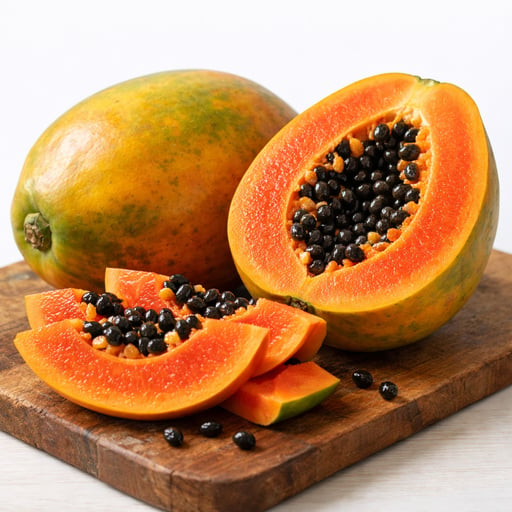
Papaya
पपीता
Papaya is a tropical fruit known for its sweet taste and bright orange flesh. It is commonly eaten raw, either fresh or in fruit salads, and used in beverages and desserts.
Nutrition per 100g
Nutrient Breakdown
% DV = % Daily Value (adult RDA, ICMR 2020). Values per 100g edible portion.
Use Papaya in meal plans
17,000+ foods with real-time nutrient tracking, AI generation, and WhatsApp sharing.
Start FreeFree plan · No credit card
Common questions about Papaya
How many calories are in 1 cup cubes (~140g) of Papaya?
1 cup cubes (~140g) (140 g) of Papaya has about 60 kcal, based on 43 kcal per 100 g.
How much protein is in Papaya?
Papaya provides about 0.5 g of protein per 100 g.
How is papaya commonly used in Indian cuisine?
Papaya is often eaten raw as fresh fruit, added to fruit salads, smoothies, and sometimes used in savory dishes like chutneys and salads.
Is papaya suitable for a vegan diet?
Yes, papaya is a plant-based fruit and is suitable for vegan diets.
How should papaya be stored for freshness?
Keep unripe papayas at room temperature to ripen; once ripe, store in the refrigerator and consume within a few days for best quality.
About Papaya
Papaya is a tropical fruit native to Central America but widely cultivated in India and other tropical regions. It is typically eaten raw when ripe, featuring soft, orange flesh with a sweet flavor. Papaya is popular as a refreshing fruit snack and is often included in fruit salads, smoothies, and juices.
- It is naturally low in fat and protein but provides carbohydrates primarily as natural sugars.
- Papaya contains vitamin C and small amounts of vitamin A and folate.
- Being vegan and free from common allergens, it is widely accepted in various diets.
- Its low sodium and fat content make it a light, hydrating fruit choice for all ages.
Values per 100g edible portion.
Nutrition data is for reference only. Values may vary by preparation method, brand, and region. Full disclaimer
Similar foods
Browse all →Papaya nectar
Papaya, unripe, green flesh, raw
Papaya, flesh only, raw
Papaya, pulp, raw
Papaya, yellow, peeled, raw
Papaya, red, peeled, raw
Papaya, flesh only, raw, weighed with skin and pips
Papaya, pulp, steamed