

 by Workfile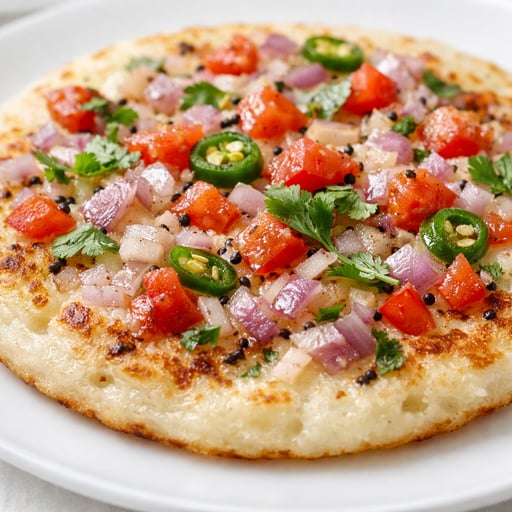
Uttapam
उतपम
Uttapam is a popular South Indian savory pancake made from fermented rice and urad dal batter, topped with vegetables like onions, tomatoes, and chilies. It is typically served hot with chutneys and sambar for breakfast or snacks.
Nutrition per 100g
Nutrient Breakdown
% DV = % Daily Value (adult RDA, ICMR 2020). Values per 100g edible portion.
Use Uttapam in meal plans
17,000+ foods with real-time nutrient tracking, AI generation, and WhatsApp sharing.
Start FreeFree plan · No credit card
Common questions about Uttapam
How many calories are in 1 uttapam (~100g) of Uttapam?
1 uttapam (~100g) (100 g) of Uttapam has about 150 kcal, based on 150 kcal per 100 g.
How much protein is in Uttapam?
Uttapam provides about 4 g of protein per 100 g.
What is Uttapam made from?
Uttapam is made from a fermented batter of rice and urad dal, topped with vegetables like onions and tomatoes.
Is Uttapam suitable for vegetarians?
Yes, Uttapam is a vegetarian dish and contains no meat, fish, or eggs.
How should Uttapam be stored?
Uttapam is best consumed fresh. Leftovers should be refrigerated and consumed within a day, preferably reheated before eating.
About Uttapam
Uttapam is a traditional South Indian dish characterized by a thick pancake made from a fermented batter of rice and urad dal (black gram). Unlike dosa, which is thin and crispy, uttapam is thicker and often topped with chopped onions, tomatoes, green chilies, and other vegetables, providing a flavorful and nutritious twist.
It is commonly consumed during breakfast or as a light meal or snack, accompanied by coconut chutney, tomato chutney, and sambar (a lentil-based vegetable stew). The fermentation process enhances the bioavailability of nutrients and contributes to a mildly tangy flavor.
Nutritionally, uttapam provides a balance of carbohydrates and protein from the rice and dal, with moderate fat content depending on oil usage during cooking. It also contains small amounts of minerals like iron and calcium, and some vitamins from vegetables used as toppings.
This dish is vegetarian and widely enjoyed in Indian households. Portion sizes vary but typically range from small to medium pieces, making it versatile for different meal occasions.
Values per 100g edible portion.
Nutrition data is for reference only. Values may vary by preparation method, brand, and region. Full disclaimer