


 by Workfile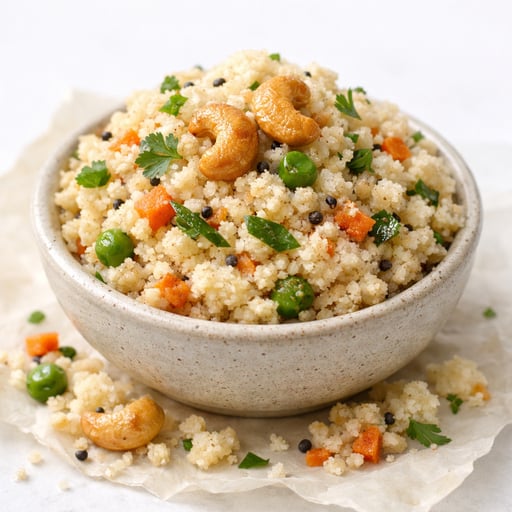
Upma
उपमा
Upma is a popular South Indian breakfast dish made by cooking semolina with spices, vegetables, and tempered mustard seeds. It is light, mildly spiced, and often eaten with chutney or sambar.
Nutrition per 100g
Nutrient Breakdown
% DV = % Daily Value (adult RDA, ICMR 2020). Values per 100g edible portion.
Use Upma in meal plans
17,000+ foods with real-time nutrient tracking, AI generation, and WhatsApp sharing.
Start FreeFree plan · No credit card
Common questions about Upma
How many calories are in 1 plate (~150g) of Upma?
1 plate (~150g) (150 g) of Upma has about 240 kcal, based on 160 kcal per 100 g.
How much protein is in Upma?
Upma provides about 3.5 g of protein per 100 g.
What is Upma typically made from?
Upma is primarily made from semolina (rava), cooked with various spices, vegetables, and sometimes nuts or seeds.
How is Upma usually served?
Upma is commonly served hot, often garnished with fresh coriander or lemon, and can be enjoyed as a breakfast dish or snack.
Is Upma suitable for a vegan diet?
Yes, Upma is entirely plant-based and suitable for vegan diets, as it contains no animal products.
What are some common pairings with Upma?
Upma is often paired with coconut chutney, sambar, or pickles to enhance its flavor.
About Upma
Upma is a traditional South Indian savory porridge-like dish prepared primarily from semolina (rava or suji). It is cooked with water, tempered with mustard seeds, curry leaves, green chilies, and often mixed with vegetables like onions, peas, and carrots.
This dish is commonly consumed as a breakfast or evening snack across India, known for its quick preparation and comforting taste. Nutritionally, upma provides moderate energy primarily from carbohydrates with some protein and a small amount of fat contributed by the oil or ghee used.
- Typically vegetarian and spiced mildly
- Contains gluten from semolina (wheat)
- Usually low in sugars and moderate in sodium depending on added salt
Upma fits well into vegetarian Indian diets and can be made healthier by increasing vegetable content or reducing added fat.
Values per 100g edible portion.
Nutrition data is for reference only. Values may vary by preparation method, brand, and region. Full disclaimer
Similar foods
Browse all →Vermicelli Upma
Bread upma
Uttapam
उतपम
Vegetable upma
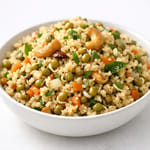
Sprouts upma
Rice upma
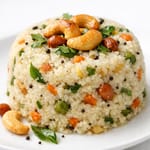
Semolina upma
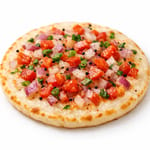
Onion tomato uttapam