


 by Workfile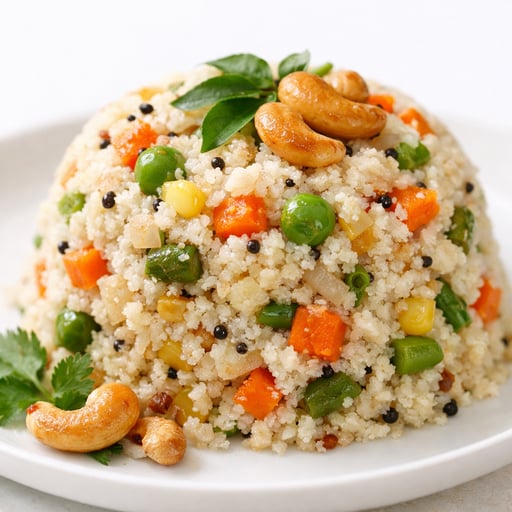
Vegetable upma
Also known as: VEGETABLE UPMA
A savory South Indian dish made with semolina, vegetables, and spices, typically enjoyed as a breakfast or snack option.
Nutrition per 100g
Nutrient Breakdown
Key Nutrients(16)
% DV = % Daily Value (adult RDA, ICMR 2020). Values per 100g edible portion.
Use Vegetable upma in meal plans
17,000+ foods with real-time nutrient tracking, AI generation, and WhatsApp sharing.
Start FreeFree plan · No credit card
Common questions about Vegetable upma
How many calories are in 1 plate of Vegetable upma?
1 plate (236 g) of Vegetable upma has about 346 kcal, based on 146 kcal per 100 g.
How much protein is in Vegetable upma?
Vegetable upma provides about 4.7 g of protein per 100 g.
How much sugar does Vegetable upma contain?
Vegetable upma has about 1.4 g of total sugars per 100 g.
Is Vegetable Upma suitable for vegetarians?
Yes, Vegetable Upma is a vegetarian dish made with semolina and vegetables, containing no meat or eggs.
How should Vegetable Upma be stored?
Store Vegetable Upma in an airtight container in the refrigerator for up to 2 days. Reheat thoroughly before serving.
About Vegetable upma
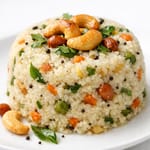
Vegetable Upma is a popular South Indian dish made primarily from semolina (rava), cooked with various vegetables like peas, carrots, and bell peppers. It is seasoned with mustard seeds, cumin seeds, and curry leaves, giving it a rich flavor.
Typically enjoyed as a breakfast or snack, Upma is a comforting dish that is both filling and nutritious. It is a good source of carbohydrates, and with the added vegetables, it enhances the dietary fiber and vitamin content.
Key highlights of Vegetable Upma include low calories and a decent amount of protein, making it suitable for a mid-morning meal or evening snack. However, individuals with gluten intolerance should be cautious, as semolina is derived from wheat.
Values per 100g edible portion.
Nutrition data is for reference only. Values may vary by preparation method, brand, and region. Full disclaimer
Contains data from Indian Nutrient Databank (INDB), University of Edinburgh, licensed under CC BY 4.0, modified for presentation.
Report a data issueSimilar foods
Browse all →
Bread upma
Sprouts upma
Vegetable poha
Rice upma
Semolina upma
Vermicelli upma
Upma
Uttapam