


 by Workfile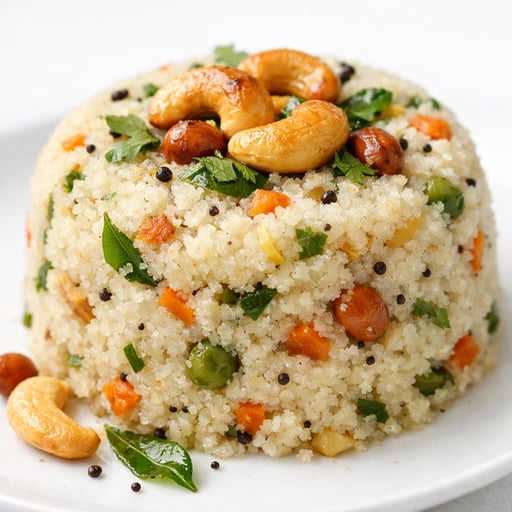
Semolina upma
Also known as: SEMOLINA UPMA, Suji/Rava upma
Semolina Upma is a popular South Indian breakfast made by cooking semolina with seasonings, vegetables, and moderate oil.
Nutrition per 100g
Nutrient Breakdown
Key Nutrients(14)
% DV = % Daily Value (adult RDA, ICMR 2020). Values per 100g edible portion.
Use Semolina upma in meal plans
17,000+ foods with real-time nutrient tracking, AI generation, and WhatsApp sharing.
Start FreeFree plan · No credit card
Common questions about Semolina upma
How many calories are in 1 bowl of Semolina upma?
1 bowl (106 g) of Semolina upma has about 157 kcal, based on 148 kcal per 100 g.
How much protein is in Semolina upma?
Semolina upma provides about 3.3 g of protein per 100 g.
How much sugar does Semolina upma contain?
Semolina upma has about 1.3 g of total sugars per 100 g.
What meals is Semolina Upma suitable for?
It is commonly eaten for breakfast, mid-morning snack, or evening snack.
Is Semolina Upma vegetarian?
Yes, Semolina Upma is a vegetarian dish that contains no meat, fish, or eggs.
Does Semolina Upma contain gluten?
Yes, semolina is made from wheat and naturally contains gluten.
About Semolina upma
Semolina Upma is a traditional South Indian dish commonly eaten for breakfast or as a snack. It is prepared by roasting semolina (suji) and then cooking it with water, spices, and various vegetables like onions, carrots, and peas. This dish is known for its simple preparation and comforting taste.
- It provides a moderate energy content mainly from carbohydrates and some fats added during cooking.
- According to verified nutrient data, it provides significant Vitamin E, an antioxidant nutrient.
- Semolina Upma is vegetarian and free from common allergens like gluten when made traditionally but contains gluten inherently due to semolina.
This dish fits well into a balanced meal plan when consumed with additional protein or vegetables as needed.
Values per 100g edible portion.
Nutrition data is for reference only. Values may vary by preparation method, brand, and region. Full disclaimer
Contains data from Indian Nutrient Databank (INDB), University of Edinburgh, licensed under CC BY 4.0, modified for presentation.
Report a data issueSimilar foods
Browse all →
Semolina idli
Semolina porridge
Semolina dosa
Vermicelli upma
Semolina cake
Semolina burfi
Vegetable upma
Semolina dhokla