

 by Workfile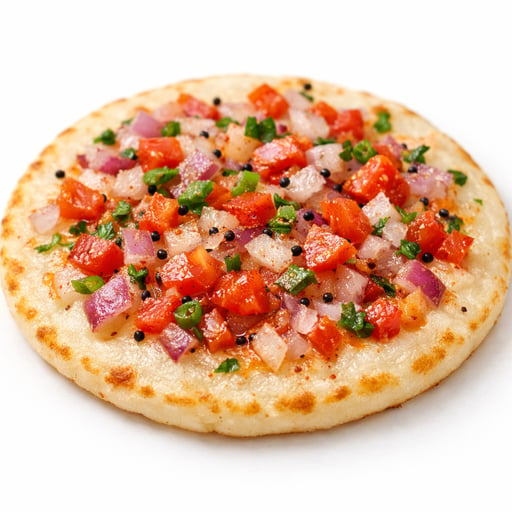
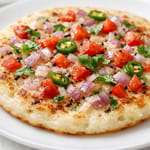
Onion tomato uttapam
Also known as: Onion tomato Uttapam
A South Indian savory pancake topped with chopped onions and tomatoes, made from fermented rice and urad dal batter.
Nutrition per 100g
Nutrient Breakdown
Key Nutrients(14)
% DV = % Daily Value (adult RDA, ICMR 2020). Values per 100g edible portion.
Use Onion tomato uttapam in meal plans
17,000+ foods with real-time nutrient tracking, AI generation, and WhatsApp sharing.
Start FreeFree plan · No credit card
Common questions about Onion tomato uttapam
How many calories are in 1 uttapam of Onion tomato uttapam?
1 uttapam (139 g) of Onion tomato uttapam has about 642 kcal, based on 462 kcal per 100 g.
How much protein is in Onion tomato uttapam?
Onion tomato uttapam provides about 1.9 g of protein per 100 g.
How much sugar does Onion tomato uttapam contain?
Onion tomato uttapam has about 0.8 g of total sugars per 100 g.
Is Onion Tomato Uttapam a vegetarian dish?
Yes, Onion Tomato Uttapam is a vegetarian dish made from rice, urad dal, onions, and tomatoes without any meat or eggs.
What is Onion Tomato Uttapam typically served with?
It is commonly served with coconut chutney, sambar, or tomato chutney as accompaniments.
How should Onion Tomato Uttapam be stored?
It is best consumed fresh. Leftovers can be refrigerated for up to 1 day and reheated on a griddle or microwave.
About Onion tomato uttapam
Onion Tomato Uttapam is a popular South Indian breakfast and snack dish made by spreading fermented rice and urad dal batter thickly on a griddle and topping it with chopped onions and tomatoes. It combines the tangy flavor of fermentation with the fresh taste of vegetables.
This dish is typically cooked with a small amount of oil or ghee, making it moderately low in fat and calories. It offers a decent amount of carbohydrate and protein from the rice and dal batter, along with some dietary fiber from the vegetables.
Notably, this preparation is exceptionally high in vitamin E, providing over twice the daily recommended intake per 100g, which supports antioxidant functions. It is vegetarian, contains no eggs or meat, and is generally free from common allergens except possible gluten from any added wheat flour or cross contamination.
- Popular as a breakfast or evening snack
- Moderate calories with balanced macros
- Rich source of vitamin E among typical Indian snacks
Values per 100g edible portion.
Nutrition data is for reference only. Values may vary by preparation method, brand, and region. Full disclaimer
Contains data from Indian Nutrient Databank (INDB), University of Edinburgh, licensed under CC BY 4.0, modified for presentation.
Report a data issue