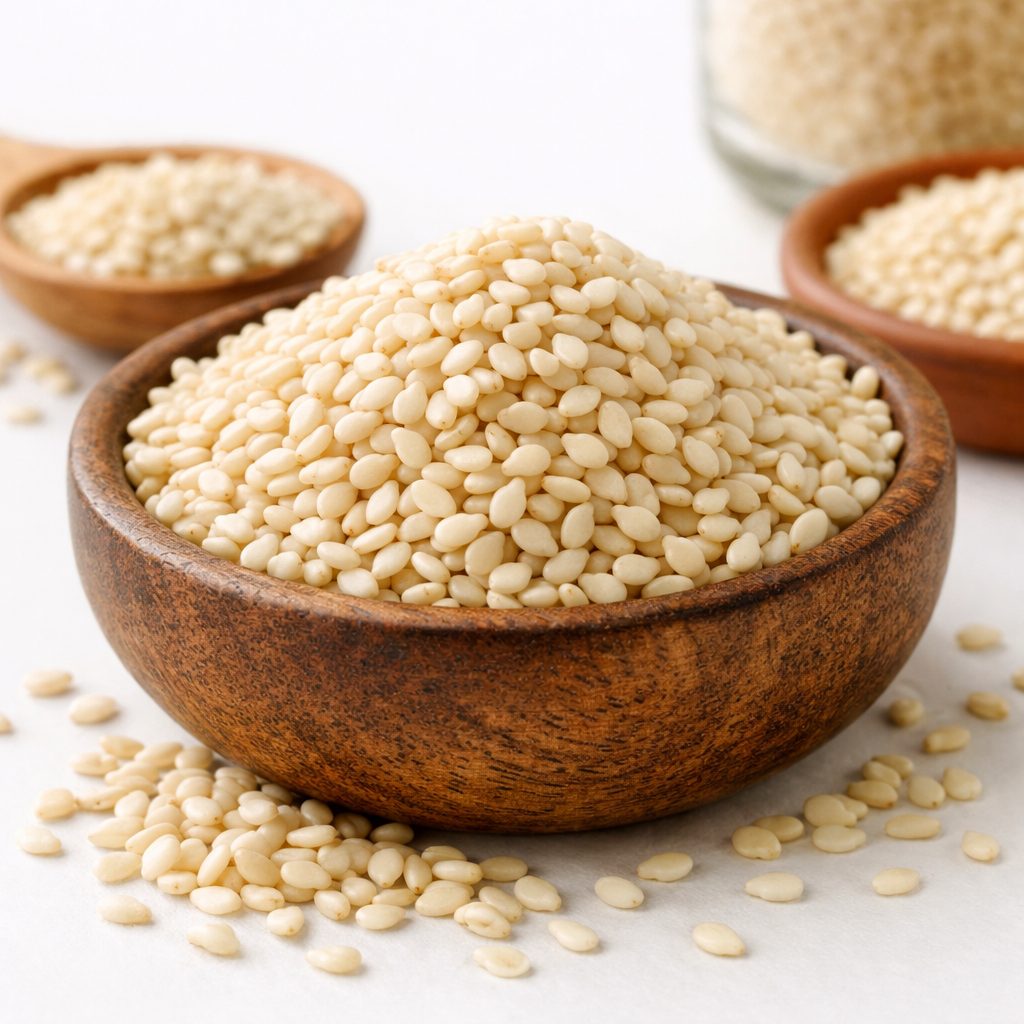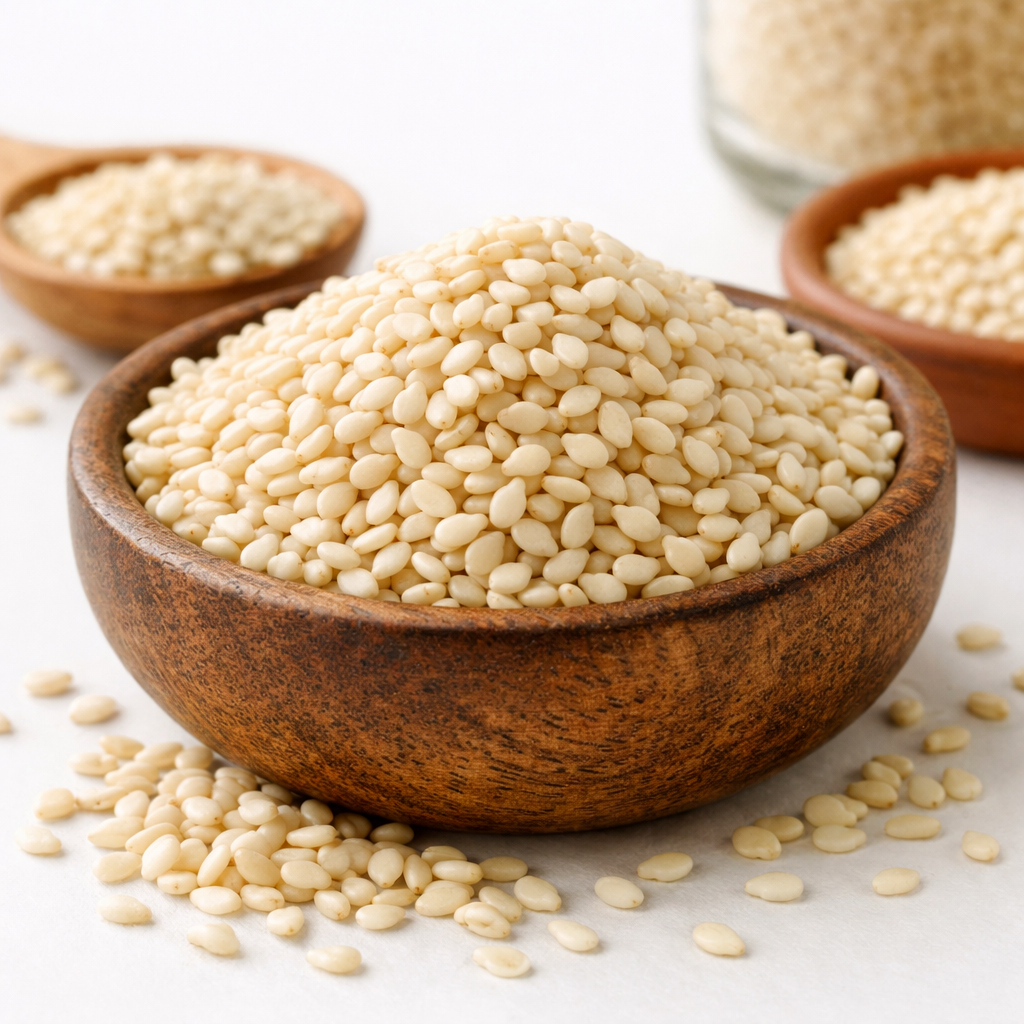
तिल
Sesame seeds (Til) are small oilseeds widely used in Indian cuisine as a garnish and in sweets. They are nutrient-dense and traditionally used in various dishes for flavor and texture.
% DV = % Daily Value (adult RDA, ICMR 2020). Values per 100g edible portion.
Sesame seeds, known as Til in Hindi, are tiny oil seeds native to tropical regions. They are harvested from the Sesamum indicum plant and commonly used across Indian households either raw or roasted. These seeds impart a nutty flavor and crunchy texture to foods such as ladoos, chutneys, and snacks.
They are rich in protein and dietary fiber, making them a valuable ingredient in vegetarian and vegan diets. Traditionally, they are consumed during festivals and also as a daily garnish in cooking.
Sesame seeds are vegan and do not contain common allergens except for sesame itself. They are best stored in airtight containers to maintain freshness and prevent rancidity.
9,000+ Indian foods with real-time nutrient tracking, AI generation, and WhatsApp sharing.
Start FreeFree plan · No credit card
Values per 100g edible portion.
Nutrition data is for reference only. Values may vary by preparation method, brand, and region. Full disclaimer
Mustard Seeds
Sesame seeds seeds
Sesame seed kernels seeds
Sesame meal seeds
Sesame flour seeds
Sesame butter seeds
Sunflower Seeds
सूरजमुखी के बीज
Chia Seeds