

 by Workfile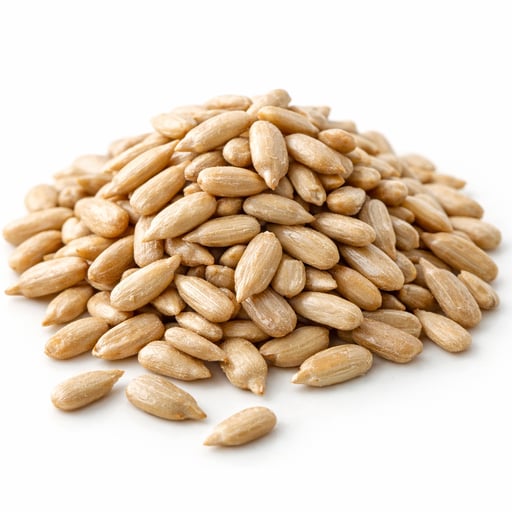
Sunflower Seeds
सूरजमुखी के बीज
Sunflower Seeds are edible seeds of the sunflower plant, consumed raw or roasted as a snack or ingredient in dishes. They are rich in protein and dietary fiber, making them a nutritious nutty snack.
Nutrition per 100g
Nutrient Breakdown
% DV = % Daily Value (adult RDA, ICMR 2020). Values per 100g edible portion.
Use Sunflower Seeds in meal plans
17,000+ foods with real-time nutrient tracking, AI generation, and WhatsApp sharing.
Start FreeFree plan · No credit card
Common questions about Sunflower Seeds
How many calories are in 1 tbsp (~10g) of Sunflower Seeds?
1 tbsp (~10g) (10 g) of Sunflower Seeds has about 58 kcal, based on 584 kcal per 100 g.
How much protein is in Sunflower Seeds?
Sunflower Seeds provides about 21 g of protein per 100 g.
How are sunflower seeds typically used in cooking?
Sunflower seeds can be eaten raw or roasted, added to salads, baked into breads, or mixed into snacks and trail mixes.
Are sunflower seeds suitable for vegans?
Yes, sunflower seeds are plant-based and suitable for vegan diets.
How should sunflower seeds be stored for freshness?
Store sunflower seeds in an airtight container in a cool, dry place to maintain freshness and prevent rancidity.
About Sunflower Seeds
Sunflower Seeds come from the large flowering plant native to North America, now widely cultivated worldwide. They are typically eaten raw, roasted, or added to salads, baked goods, and health mixes.
They provide a rich source of protein and dietary fiber, supporting balanced nutrition. These seeds are vegan and naturally free of common allergens such as gluten and dairy.
Sunflower Seeds are commonly consumed as a snack or incorporated into breakfast cereals and trail mixes. Their nutritional profile supports their use in energy-boosting foods.
- Rich in protein and fiber
- Vegan and allergen-friendly
- Commonly eaten raw or roasted
- Used in snacks, salads, and baking
Values per 100g edible portion.
Nutrition data is for reference only. Values may vary by preparation method, brand, and region. Full disclaimer
Similar foods
Browse all →Sunflower seed
Sunflower oil
Toasted sunflower seeds
Sunflower seed, grilled, salted
Seeds, sunflower seed kernels, toasted, with salt added
Seeds, sunflower seed kernels, dried
सूरजमुखी के बीज