अखरोट
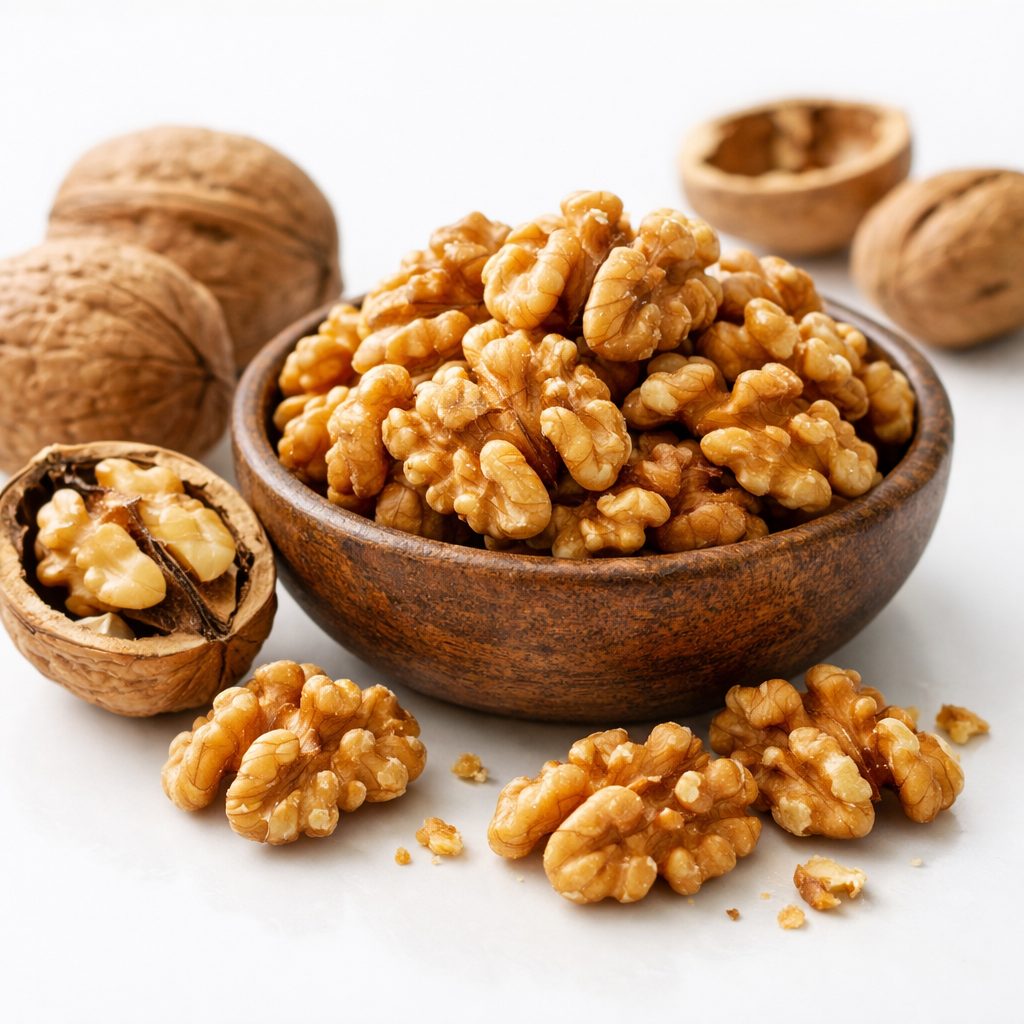
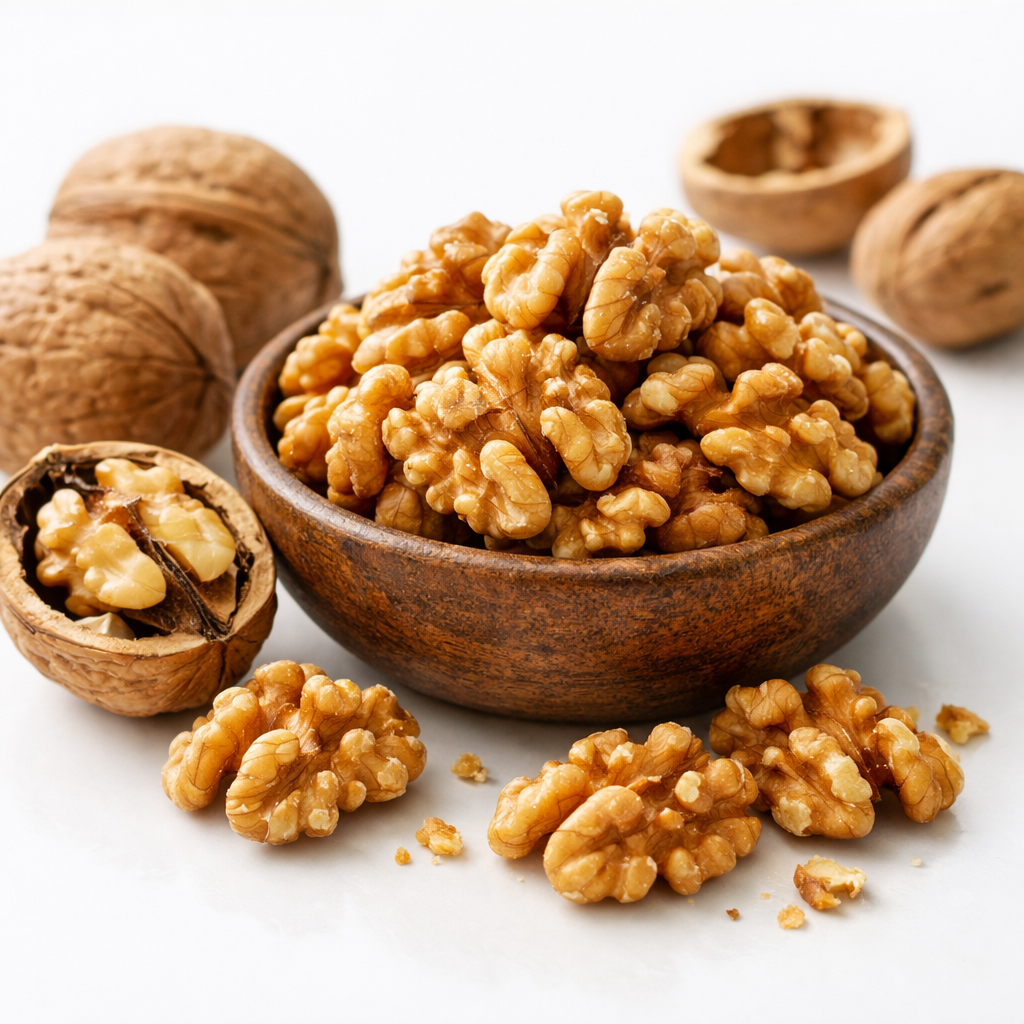
Walnuts are edible seeds from the walnut tree, widely used as a nutritious snack and ingredient in cooking and baking. They are rich in protein and fiber, making them a valuable part of a plant-based diet.
% DV = % Daily Value (adult RDA, ICMR 2020). Values per 100g edible portion.
Walnuts are the seeds of trees from the genus Juglans and are widely enjoyed around the world for their unique flavor and crunchy texture. Commonly eaten raw or roasted, they are popular as a snack, in desserts, and in salads.
They provide a significant amount of protein and dietary fiber, with 33% and 28% of the recommended daily values respectively per 100g. This makes them a favored option for those seeking to increase these nutrients in their diet.
Typically consumed raw or roasted, walnuts are vegan and free from dairy and gluten, making them suitable for various diets. Their natural nutrients, especially protein and fiber, contribute to their nutritional appeal.
Note: Nutritional claims strictly reflect protein and fiber content as per verified data.
9,000+ Indian foods with real-time nutrient tracking, AI generation, and WhatsApp sharing.
Start FreeFree plan · No credit card
Values per 100g edible portion.
Nutrition data is for reference only. Values may vary by preparation method, brand, and region. Full disclaimer
Cashews
काजू
Almonds
बादाम
Pistachios
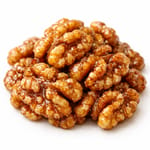
Walnuts nuts
मेवा, ग्लेज़ड अखरोट
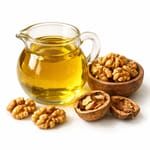
Walnut oil
अखरोट का तेल
Hazelnuts or filberts nuts
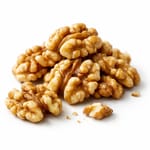
Walnut
Akhrot

Almonds nuts
बादाम