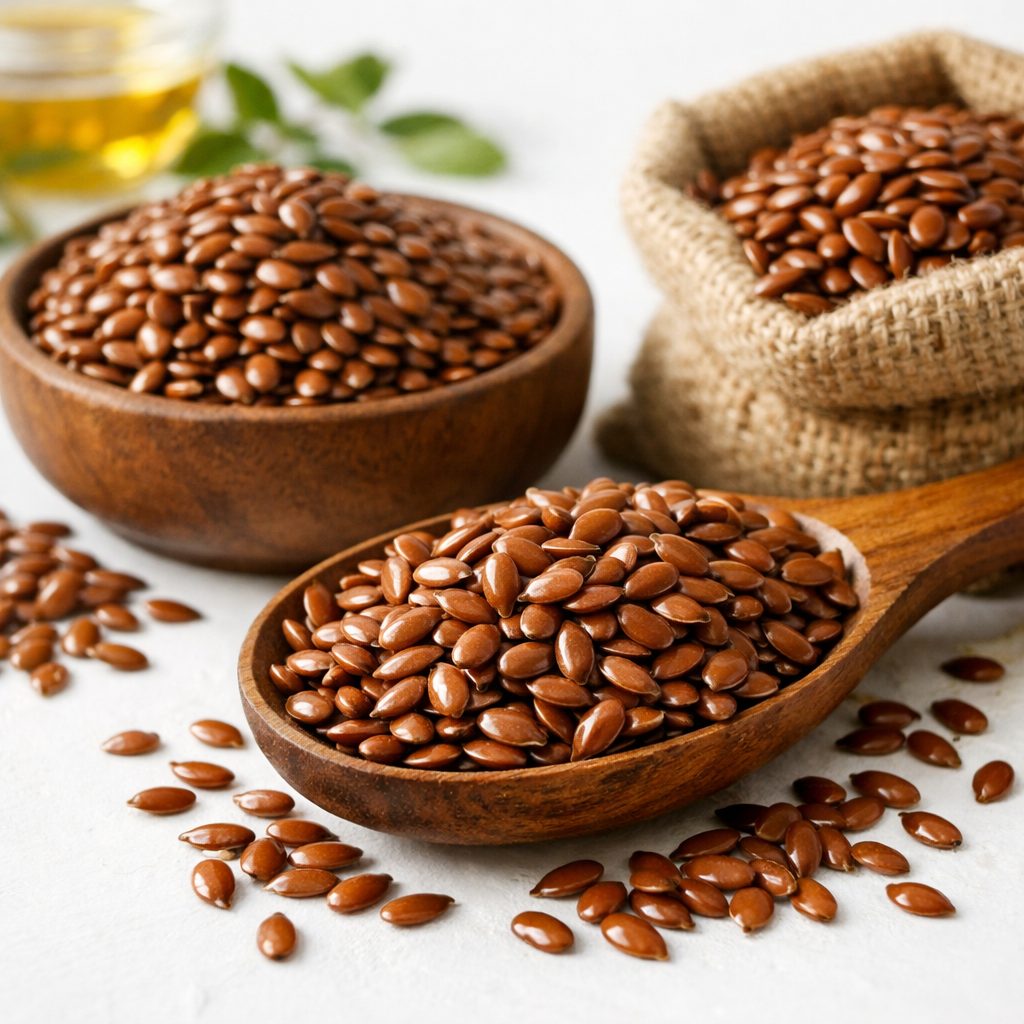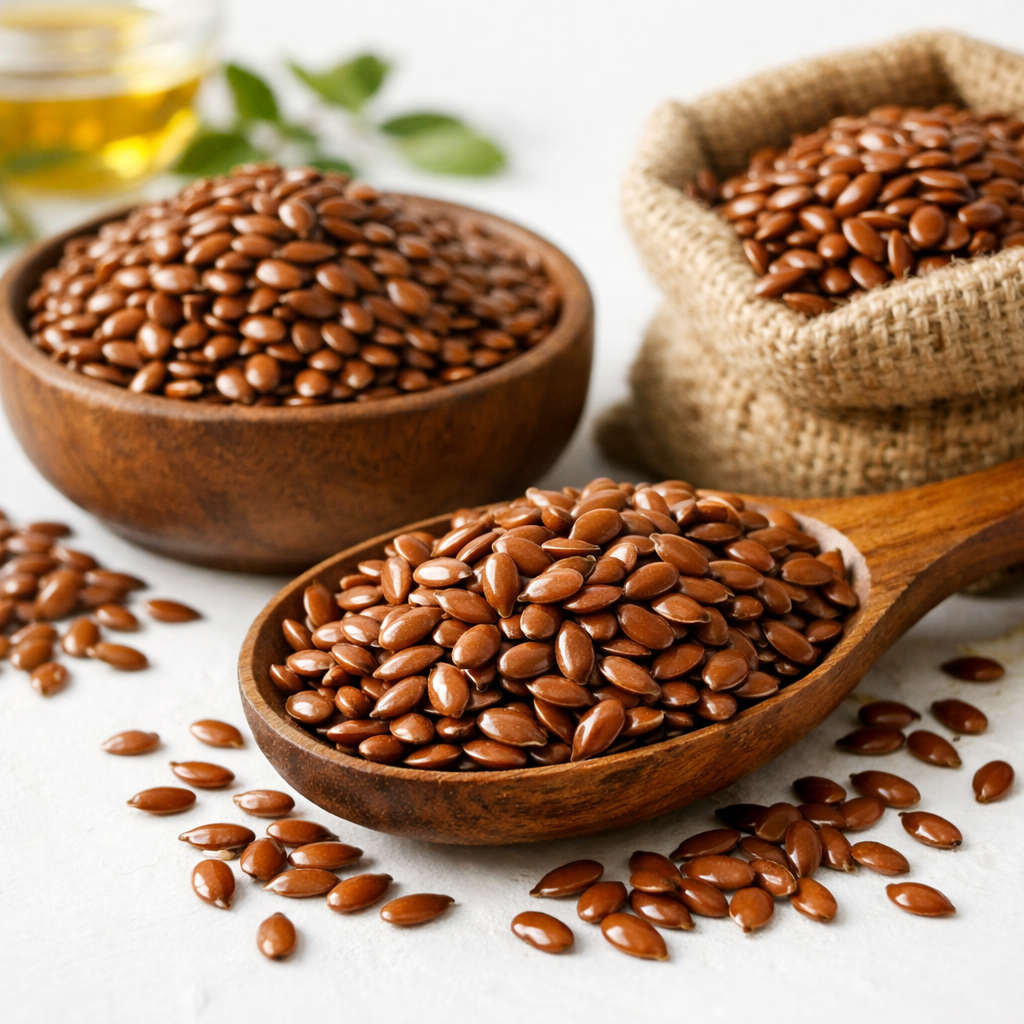
अलसी के बीज
Flax seeds are small oilseeds known for their high fiber and protein content. They are commonly used whole or ground in Indian and global cuisines, often added to breads, cereals, and smoothies.
% DV = % Daily Value (adult RDA, ICMR 2020). Values per 100g edible portion.
Flax seeds, also called 'अलसी के बीज' in Hindi, are tiny oilseeds native to the region around the Mediterranean and India. They are widely used as a nutritious ingredient in numerous Indian households, added to rotis, parathas, and breakfast cereals for increased texture and nutrition. These seeds are consumed raw or ground to unlock their nutrients.
Flax seeds are distinguished by their high levels of dietary fiber and protein, making them a valuable addition to vegan and vegetarian diets. They provide significant amounts of both nutrients per 100g serving, as reflected in verified nutrient data. Nutritionally, flax seeds contain minimal sugars and moderate fats, primarily polyunsaturated. They are free from common allergens and suitable for vegan diets.
They do not contain vitamin B12 or significant vitamin C but provide moderate minerals like calcium, iron, potassium, and zinc. Flax seeds have a moderate caloric value typical for oilseeds and are a versatile inclusion in Indian cuisine.
9,000+ Indian foods with real-time nutrient tracking, AI generation, and WhatsApp sharing.
Start FreeFree plan · No credit card
Values per 100g edible portion.
Nutrition data is for reference only. Values may vary by preparation method, brand, and region. Full disclaimer
Flaxseed seeds
Flaxseed oil
Chia Seeds
Sunflower Seeds
सूरजमुखी के बीज
Cottonseed flour seeds
Linseeds
Alsi
Sesame Seeds
Mustard Seeds