


 by Workfile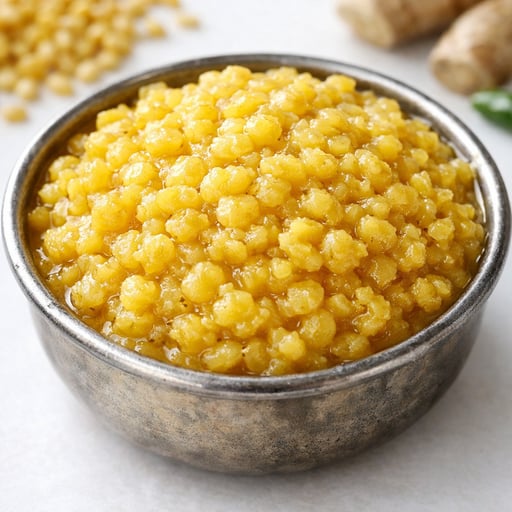
Toor Dal Cooked
तूर दाल पकी हुई
Cooked Toor Dal is a staple Indian lentil dish made by boiling split pigeon peas until soft, often used as a base for dals and curries.
Nutrition per 100g
Nutrient Breakdown
% DV = % Daily Value (adult RDA, ICMR 2020). Values per 100g edible portion.
Use Toor Dal Cooked in meal plans
17,000+ foods with real-time nutrient tracking, AI generation, and WhatsApp sharing.
Start FreeFree plan · No credit card
Common questions about Toor Dal Cooked
How many calories are in 1 katori (~150g) of Toor Dal Cooked?
1 katori (~150g) (150 g) of Toor Dal Cooked has about 173 kcal, based on 115 kcal per 100 g.
How much protein is in Toor Dal Cooked?
Toor Dal Cooked provides about 7.5 g of protein per 100 g.
How is cooked Toor Dal commonly eaten?
Cooked Toor Dal is usually served as a dal curry with rice or roti as part of Indian meals.
Is Toor Dal suitable for vegetarian and vegan diets?
Yes, Toor Dal is plant-based and suitable for both vegetarian and vegan diets.
How should cooked Toor Dal be stored?
Cooked Toor Dal should be refrigerated and consumed within a couple of days to maintain freshness and safety.
About Toor Dal Cooked
Toor Dal Cooked is made from split and boiled pigeon peas, a popular pulse in Indian cuisine known for its mildly nutty flavor and soft texture once cooked. It is a fundamental ingredient in many Indian households, forming the base for dal preparations widely consumed across the country.
- Typically prepared by boiling the dal until soft, often tempered with spices for added flavor.
- Provides moderate protein and dietary fiber, making it a valuable plant-based protein source.
- Contains essential minerals such as iron, potassium, and calcium.
- Naturally free from animal products, making it suitable for vegan diets.
It is commonly served with rice or Indian breads and can be adapted to different regional tastes with varying spices and consistency.
Values per 100g edible portion.
Nutrition data is for reference only. Values may vary by preparation method, brand, and region. Full disclaimer
Similar foods
Browse all →Mixed Dal Cooked
Masoor Dal Cooked
मसूर दाल पकी हुई
Chana Dal Cooked
Moong Dal Cooked
Toor Dal
तूर दाल
Rajma Cooked
राजमा पका हुआ
Black Chana Cooked
Chicken Cooked