


 by Workfile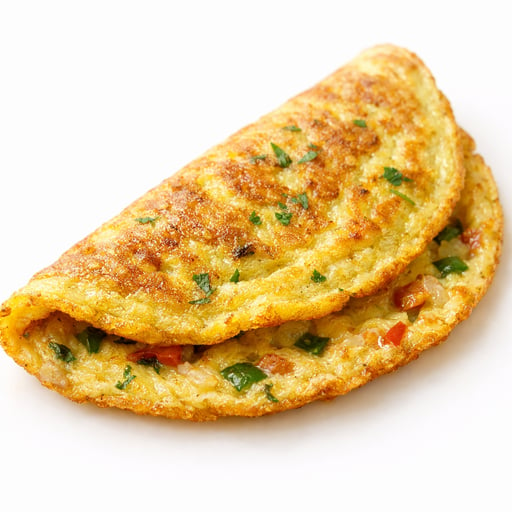
Egg, country hen, omlet
Also known as: c
A popular Indian-style omelet made with country hen eggs, commonly spiced and cooked with moderate oil.
Nutrition per 100g
Nutrient Breakdown
Key Nutrients(14)
% DV = % Daily Value (adult RDA, ICMR 2020). Values per 100g edible portion.
Use Egg, country hen, omlet in meal plans
17,000+ foods with real-time nutrient tracking, AI generation, and WhatsApp sharing.
Start FreeFree plan · No credit card
Common questions about Egg, country hen, omlet
How many calories are in 1 whole egg of Egg, country hen, omlet?
1 whole egg (55 g) of Egg, country hen, omlet has about 112 kcal, based on 204 kcal per 100 g.
How much protein is in Egg, country hen, omlet?
Egg, country hen, omlet provides about 14.8 g of protein per 100 g.
What is this omelet typically made with?
It is made from whisked country hen eggs, usually mixed with spices and cooked with a moderate amount of oil.
Is this dish suitable for vegetarians?
This dish is suitable for those who eat eggs (ovo-vegetarians), but not for strict vegetarians who avoid eggs.
How should an egg omelet be stored?
Keep cooked egg omelet refrigerated and consume within 1-2 days for best quality and safety.
About Egg, country hen, omlet
An Egg (Country Hen) Omelet is a savory dish popular across India, made by whisking country hen eggs with spices and shallow frying in oil or ghee. It is commonly enjoyed as a breakfast or snack item and is valued for its rich taste and protein content.
This omelet provides significant amounts of key nutrients including selenium, biotin, vitamin E, phosphorus, protein, folate (B9), and vitamin A. These nutrients contribute to its role as a substantial protein source with several vitamins and minerals.
Egg omelets generally fit well into omnivorous diets and are classified as "egg" dietary type due to their inclusion of eggs without meat. They have moderate fat content as typical cooking involves some oil, and they contain no dietary fiber or vitamin C.
- Commonly eaten for breakfast, snacks, or light meals
- Provides energy from protein and fat
- Contains naturally occurring vitamins and minerals from eggs
- Suitable for ovo-vegetarians who consume eggs
Despite its richness in several nutrients, it does not contain vitamin C or dietary fiber.
Values per 100g edible portion.
Nutrition data is for reference only. Values may vary by preparation method, brand, and region. Full disclaimer
Similar foods
Browse all →Egg, poultry, omlet
Egg, duck, whole, omlet
Egg, country hen, whole, boiled
Egg, country hen, whole, raw
Egg, poultry, yolk, boiled
Egg, poultry, white, boiled
Egg, whole, cooked, omelet
Egg, poultry, whole, boiled