


 by Workfile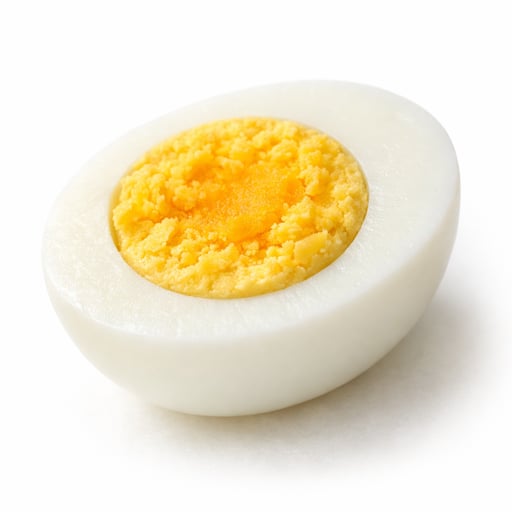
Egg, poultry, whole, boiled
Also known as: 07 17 4d 17, 1a 39 4b 26 4d 35 3e 28, 2a 4b 38 4d 24
Whole boiled poultry egg is a commonly consumed protein-rich food item.
Nutrition per 100g
Nutrient Breakdown
Key Nutrients(14)
% DV = % Daily Value (adult RDA, ICMR 2020). Values per 100g edible portion.
Use Egg, poultry, whole, boiled in meal plans
17,000+ foods with real-time nutrient tracking, AI generation, and WhatsApp sharing.
Start FreeFree plan · No credit card
Common questions about Egg, poultry, whole, boiled
How many calories are in 1 whole egg of Egg, poultry, whole, boiled?
1 whole egg (55 g) of Egg, poultry, whole, boiled has about 81 kcal, based on 148 kcal per 100 g.
How much protein is in Egg, poultry, whole, boiled?
Egg, poultry, whole, boiled provides about 13.4 g of protein per 100 g.
How is boiled whole egg commonly used in Indian cuisine?
Boiled whole eggs are eaten as snacks, added to salads, or served alongside lunches and dinners in various Indian dishes.
Is boiled egg suitable for vegetarian diets?
Boiled egg is classified as 'egg' dietary type and is not suitable for vegetarian diets that exclude eggs.
How should boiled eggs be stored to maintain freshness?
Boiled eggs should be refrigerated promptly and consumed within a week for best quality and safety.
About Egg, poultry, whole, boiled
Eggs are a staple protein source globally, including in Indian households where boiled eggs are often eaten as a snack or part of meals. Whole boiled poultry eggs provide significant amounts of essential nutrients such as protein, selenium, biotin, and vitamin A. They are also a good source of phosphorus, pantothenic acid (B5), and folate (B9). This nutrient density makes boiled eggs a compact and convenient option for balanced diets.
- They are rich in high-quality protein which supports muscle maintenance.
- Provide selenium and biotin important for metabolic functions.
- Contain significant vitamin A for vision and immune-related processes.
Eggs fit well in egg-based dietary patterns and are not considered vegetarian. They have negligible carbohydrates and sugar, and moderate fat, all of which contribute to their balanced energy content.
Values per 100g edible portion.
Nutrition data is for reference only. Values may vary by preparation method, brand, and region. Full disclaimer
Similar foods
Browse all →
Egg, poultry, white, boiled
Egg, country hen, whole, boiled

Egg, poultry, whole, raw
अंडा, पूरी, कच्चा
Egg, duck, whole, boiled
Egg, poultry, yolk, boiled
Egg, quial, whole, boiled
Egg, poultry, white, raw
Egg, country hen, whole, raw