


 by Workfile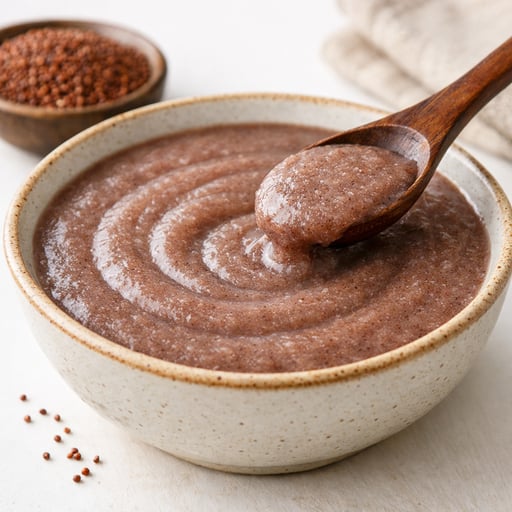
Ragi Porridge
रागी की खिचड़ी
Ragi Porridge is a traditional South Indian warm breakfast porridge made from finger millet flour cooked with water or milk. It is mildly sweet and has a smooth, slightly grainy texture.
Nutrition per 100g
Nutrient Breakdown
% DV = % Daily Value (adult RDA, ICMR 2020). Values per 100g edible portion.
Use Ragi Porridge in meal plans
17,000+ foods with real-time nutrient tracking, AI generation, and WhatsApp sharing.
Start FreeFree plan · No credit card
Common questions about Ragi Porridge
How many calories are in 1 bowl (~200g) of Ragi Porridge?
1 bowl (~200g) (200 g) of Ragi Porridge has about 160 kcal, based on 80 kcal per 100 g.
How much protein is in Ragi Porridge?
Ragi Porridge provides about 2.5 g of protein per 100 g.
How is ragi porridge typically prepared and eaten?
Ragi flour is cooked with water or milk to form a smooth porridge, eaten warm often as breakfast or a light meal.
Is ragi porridge suitable for vegetarians and vegans?
Yes, when made with water, ragi porridge is vegan. Using milk makes it vegetarian. It contains no eggs or meat.
How should ragi porridge be stored?
Store cooked ragi porridge in the refrigerator and consume within 1-2 days for best freshness and safety.
About Ragi Porridge
Ragi Porridge, also known as finger millet porridge or ragi kanji, is a staple in many South Indian households. Made by cooking finger millet flour in water or milk, it is often served as a nourishing breakfast or light meal.
This porridge is appreciated for its characteristic earthy flavor and smooth, semi-liquid texture, which can be sweetened to taste. Ragi is a cereal millet naturally gluten-free and often included in vegetarian and vegan diets.
Nutritionally, cooked ragi porridge provides moderate energy mostly from carbohydrates, small amounts of protein and fat, and some dietary fiber. It supplies minerals like iron and calcium, minerals noteworthy in millet grains. It contains no vitamin B12 and negligible vitamin A or D, with minimal vitamin C content.
Traditionally, this food is consumed warm and can be enhanced with milk or jaggery depending on preferences, offering a versatile and wholesome dietary option.
Values per 100g edible portion.
Nutrition data is for reference only. Values may vary by preparation method, brand, and region. Full disclaimer
Similar foods
Browse all →Ragi Roti
Ragi
Ragi
Semolina porridge
Porridge, made with water
Oatmeal Porridge
ओटमील पोरीज
Porridge, made with whole milk
Porridge, made with milk and water
Porridge, rolled oats, prepared with water