


 by Workfile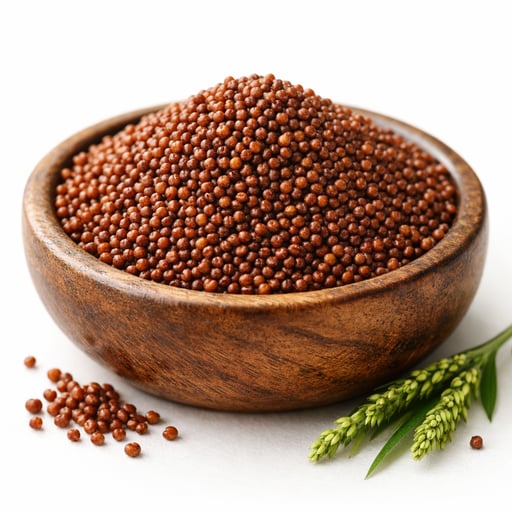
Ragi
Ragi
Eleusine coracana
Also known as: Finger millet, Bavato, Bhakri, Ukrai, Panjapulle, Kodo
Ragi, also known as finger millet, is a staple cereal grain widely consumed in South India and parts of Africa. It is valued for its high fiber and mineral content and is used to make porridges, rotis, and baked products.
Nutrition per 100g
Nutrient Breakdown
Key Nutrients(19)
% DV = % Daily Value (adult RDA, ICMR 2020). Values per 100g edible portion.
Use Ragi in meal plans
17,000+ foods with real-time nutrient tracking, AI generation, and WhatsApp sharing.
Start FreeFree plan · No credit card
Common questions about Ragi
How many calories are in 1 katori cooked rice of Ragi?
1 katori cooked rice (150 g) of Ragi has about 481 kcal, based on 321 kcal per 100 g.
How much protein is in Ragi?
Ragi provides about 7.2 g of protein per 100 g.
How much sugar does Ragi contain?
Ragi has about 0.3 g of total sugars per 100 g.
What are common uses of Ragi in cooking?
Ragi is commonly used to make porridge, flatbreads like roti, and baked goods. It can be cooked as a cereal or ground into flour for various recipes.
Is Ragi suitable for vegan diets?
Yes, Ragi is plant-based and contains no animal products, making it suitable for vegans.
How should Ragi be stored to maintain freshness?
Store Ragi flour or grain in an airtight container in a cool, dry place to prevent moisture absorption and insect infestation.
About Ragi
Ragi, or finger millet, is a drought-resistant cereal crop predominantly grown in India and Africa. It is commonly ground into flour and used in traditional recipes such as ragi mudde (dumplings), porridges, and flatbreads (rotis). This millet is notable for its high fiber content, contributing about 11 grams per 100 grams, and significant mineral levels, including chromium, manganese, copper, magnesium, selenium, and calcium. These nutrients support diverse dietary needs, making ragi a nutritious option especially for plant-based diets. Typically consumed as a whole grain flour rather than the raw grain, it is naturally gluten-free and vegan. Its mild flavor makes it versatile for both sweet and savory preparations.
Values per 100g edible portion.
Nutrition data is for reference only. Values may vary by preparation method, brand, and region. Full disclaimer
Similar foods
Browse all →Varagu
Finger millet biscuit
Bajra
Bajra
Finger millet cake
Rice, raw, brown
Chawal
Jowar
Jowar
Dry maize
Makka
Dal red gram