


 by Workfile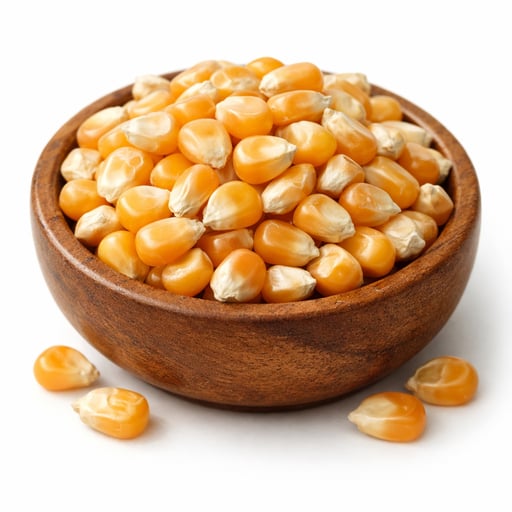
Dry maize
Makka
Zea mays
Also known as: Makoi, Bhutta, Corn, Makai, Mekke jola, Symbai riewhadem stem
Dry maize, also known as corn, is a staple cereal grain widely used in Indian cooking and other cuisines worldwide. It is typically ground into flour or processed further before consumption.
Nutrition per 100g
Nutrient Breakdown
Key Nutrients(20)
% DV = % Daily Value (adult RDA, ICMR 2020). Values per 100g edible portion.
Use Dry maize in meal plans
17,000+ foods with real-time nutrient tracking, AI generation, and WhatsApp sharing.
Start FreeFree plan · No credit card
Common questions about Dry maize
How many calories are in 1 roti (makki) of Dry maize?
1 roti (makki) (40 g) of Dry maize has about 134 kcal, based on 334 kcal per 100 g.
How much protein is in Dry maize?
Dry maize provides about 8.8 g of protein per 100 g.
How much sugar does Dry maize contain?
Dry maize has about 1.7 g of total sugars per 100 g.
How is dry maize commonly used in cooking?
Dry maize is often ground into flour for breads and snacks or boiled and eaten as a cereal grain.
Is dry maize suitable for vegan diets?
Yes, dry maize is entirely plant-based and suitable for vegan diets.
How should dry maize be stored?
Store dry maize in a cool, dry place in an airtight container to preserve freshness and prevent pests.
About Dry maize
Maize, commonly called corn in English and मक्का (makka) in Hindi, is a cereal grain that originated in Central America and is now cultivated extensively in India and worldwide. The dry kernels are hard and dense, used for making flours (like cornmeal), popping, or grinding into various preparations.
It is a high-fiber grain that provides significant amounts of magnesium, copper, phosphorus, and chromium, as well as notable levels of thiamine (Vitamin B1), manganese, and vitamin B6. These nutrients contribute to its role as an energy-rich staple, predominantly composed of carbohydrates and moderate protein.
Maize is vegan and gluten-free, making it suitable for varied diets. It is commonly boiled, roasted, or ground into flour for making traditional breads and snacks. Proper storage of dry maize is important to preserve its nutritional quality and prevent pests.
- High in fiber
- Rich in magnesium and copper
- Provides significant thiamine and vitamin B6
Values per 100g edible portion.
Nutrition data is for reference only. Values may vary by preparation method, brand, and region. Full disclaimer
Similar foods
Browse all →Maize, tender, local
Makka
Maize, tender, sweet
Makka
Jowar
Jowar
Baby corn
Rice, raw, milled
Chawal
Barley
Jau
Amaranth seed, pale brown
Ramdana
Ragi
Ragi