


 by Workfile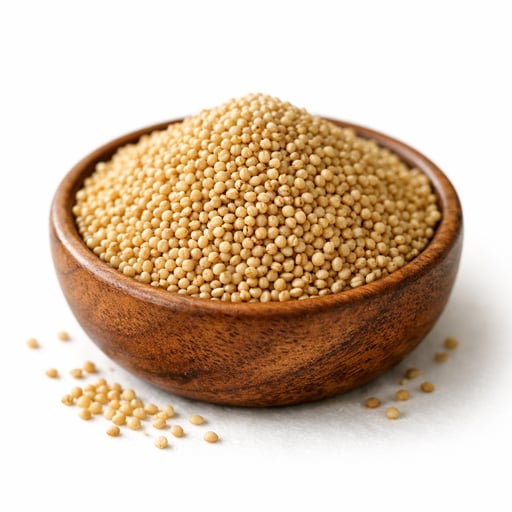
Amaranth seed, pale brown
Ramdana
Amaranthus cruentus
Also known as: Moricha guti, Rajagaro, Danthu beeja, Mawal, Cheera vithu, Chengkruk Maru
Amaranth seed, pale brown, is a nutrient-dense grain known for its high mineral content, especially chromium, manganese, magnesium, phosphorus, selenium, copper, and iron. Commonly used in Indian cuisine as flour or popped grain, it is consumed as a gluten-free cereal alternative.
Nutrition per 100g
Nutrient Breakdown
Key Nutrients(19)
% DV = % Daily Value (adult RDA, ICMR 2020). Values per 100g edible portion.
Use Amaranth seed, pale brown in meal plans
17,000+ foods with real-time nutrient tracking, AI generation, and WhatsApp sharing.
Start FreeFree plan · No credit card
Common questions about Amaranth seed, pale brown
How many calories are in 1 katori cooked of Amaranth seed, pale brown?
1 katori cooked (150 g) of Amaranth seed, pale brown has about 534 kcal, based on 356 kcal per 100 g.
How much protein is in Amaranth seed, pale brown?
Amaranth seed, pale brown provides about 13.3 g of protein per 100 g.
How much sugar does Amaranth seed, pale brown contain?
Amaranth seed, pale brown has about 0.8 g of total sugars per 100 g.
How is amaranth seed typically used in Indian cooking?
Amaranth seed is commonly roasted or popped and eaten as a snack, or ground into flour for making rotis and porridges.
Is amaranth seed suitable for a vegan diet?
Yes, amaranth seed is plant-based and naturally vegan.
How should amaranth seed be stored for best freshness?
Store amaranth seed in an airtight container in a cool, dry place away from sunlight to maintain freshness and prevent spoilage.
About Amaranth seed, pale brown
Amaranth seed, pale brown, is an ancient pseudocereal widely cultivated and consumed in India and parts of the Americas. It is typically used as whole grains popped like popcorn or ground into flour for rotis and porridges.
This seed is notable for its exceptional mineral profile, providing very high levels of chromium (368% DV), manganese (148% DV), and magnesium (87% DV). It also supplies significant amounts of phosphorus, selenium, copper, and iron, making it a mineral-rich option for vegetarian and vegan diets. Additionally, with about 6.7 g fiber per 100 g, amaranth contributes to dietary fiber intake.
Gluten-free and naturally vegan, amaranth seeds are versatile in cooking and considered a healthy cereal millet option suitable for various meals, especially breakfast and snacks. They are often soaked, boiled, or roasted before consumption. The pale brown variety has a mild nutty flavor and can be easily incorporated into traditional recipes.
- High in chromium, manganese, and magnesium
- Provides good amounts of iron and dietary fiber
- Gluten-free and vegan-friendly option
Amaranth’s nutrition supports mineral intake but as with all grains, moderation is key because of its energy density.
Values per 100g edible portion.
Nutrition data is for reference only. Values may vary by preparation method, brand, and region. Full disclaimer
Similar foods
Browse all →
Black amaranth seed
Ramdana
Amaranth leaves, red mix
Chaulai
Green amaranth leaves
Chaulai
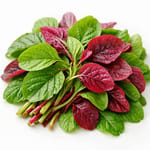
Amaranth leaves, red and green mix
Chaulai
Amaranth spinosus, leaves, green mix
Kantewali-notya
Uncooked amaranth grain
Varagu
Dry maize
Makka