


 by Workfile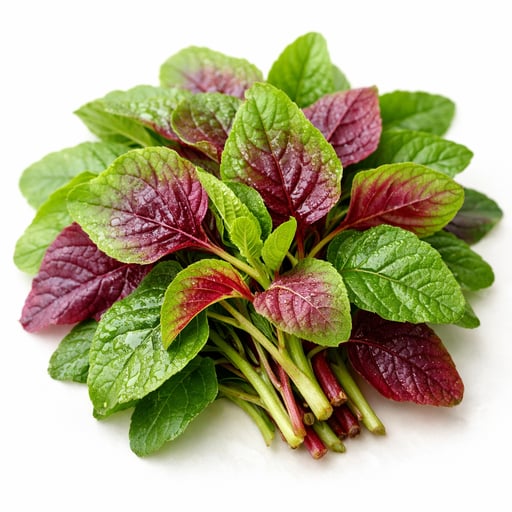
Amaranth leaves, red mix
Chaulai
Amaranthus gangeticus
Also known as: Moricha, Lal Shaakh, Lal tandaljo, Danthu, Mawal, Cheera
Amaranth Leaves, Red Mix are edible leafy greens commonly used in Indian cooking. They are rich in vitamin K, vitamin C, chromium, manganese, magnesium, selenium, iron, and folate (B9).
Nutrition per 100g
Nutrient Breakdown
Key Nutrients(19)
% DV = % Daily Value (adult RDA, ICMR 2020). Values per 100g edible portion.
Use Amaranth leaves, red mix in meal plans
17,000+ foods with real-time nutrient tracking, AI generation, and WhatsApp sharing.
Start FreeFree plan · No credit card
Common questions about Amaranth leaves, red mix
How many calories are in 1 katori cooked of Amaranth leaves, red mix?
1 katori cooked (100 g) of Amaranth leaves, red mix has about 33 kcal, based on 33 kcal per 100 g.
How much protein is in Amaranth leaves, red mix?
Amaranth leaves, red mix provides about 3.9 g of protein per 100 g.
How much sugar does Amaranth leaves, red mix contain?
Amaranth leaves, red mix has about 0.3 g of total sugars per 100 g.
How is Amaranth Leaves, Red Mix commonly used in cooking?
They are typically cooked in stir-fries, curries, dals, or sautéed with spices as a nutritious vegetable side dish.
Is Amaranth Leaves, Red Mix suitable for vegans?
Yes, these leaves are purely plant-based and suitable for vegan diets.
How should Amaranth Leaves, Red Mix be stored to maintain freshness?
Store unwashed in a perforated plastic bag in the refrigerator. Use within 2-3 days for best quality.
About Amaranth leaves, red mix
Amaranth Leaves, Red Mix are nutritious leafy vegetables popular in various Indian regional cuisines. These leaves have a mildly earthy flavor and are often used in stir-fries, curries, and dals. They are harvested when young and tender, and widely appreciated for their vibrant red-green hues.
Nutrition highlights include: - Very high in vitamin K, important for blood clotting. - Excellent source of vitamin C, supporting immune function. - Contains significant chromium, manganese, magnesium, selenium, iron, and folate (B9), which contribute to various metabolic and physiological functions.
This vegetable is naturally vegan and free of common allergens. Its low calorie and fat content with moderate protein and fiber make it a healthy addition to meals. Ideal for lunch and dinner dishes, it adds both color and nutrition to the plate.
Values per 100g edible portion.
Nutrition data is for reference only. Values may vary by preparation method, brand, and region. Full disclaimer
Similar foods
Browse all →
Amaranth leaves, red and green mix
Chaulai
Green amaranth leaves
Chaulai
Amaranth spinosus, leaves, green mix
Kantewali-notya
Amaranth spinosus, leaves, red and green mix
Kantewali-notya
Amaranth seed, pale brown
Ramdana
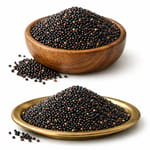
Black amaranth seed
Ramdana
Mustard leaves
Sarson ka sag
Garden cress
Halim ka patta