


 by Workfile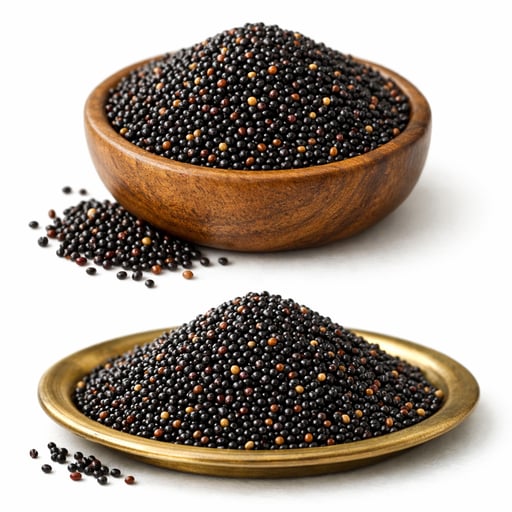
Black amaranth seed
Ramdana
Amaranthus cruentus
Also known as: Moricha guti, Danthu beeja, Mawal, Cheera vithu, Chengkruk Maru, Cavali biya
Black amaranth seed is a nutrient-dense pseudocereal commonly used in Indian cooking and traditional diets. It provides notable amounts of minerals such as chromium, manganese, magnesium, and iron.
Nutrition per 100g
Nutrient Breakdown
Key Nutrients(19)
% DV = % Daily Value (adult RDA, ICMR 2020). Values per 100g edible portion.
Use Black amaranth seed in meal plans
17,000+ foods with real-time nutrient tracking, AI generation, and WhatsApp sharing.
Start FreeFree plan · No credit card
Common questions about Black amaranth seed
How many calories are in 1 katori cooked of Black amaranth seed?
1 katori cooked (150 g) of Black amaranth seed has about 534 kcal, based on 356 kcal per 100 g.
How much protein is in Black amaranth seed?
Black amaranth seed provides about 14.6 g of protein per 100 g.
How much sugar does Black amaranth seed contain?
Black amaranth seed has about 0.9 g of total sugars per 100 g.
How is black amaranth seed commonly used in cooking?
It is used in porridges, flour blends, and traditional Indian snacks, often soaked or ground before cooking.
Is black amaranth seed suitable for vegan diets?
Yes, it is a plant-based food and suitable for vegan and vegetarian diets.
How should black amaranth seed be stored?
Keep it in an airtight container in a cool, dry place away from moisture to maintain freshness.
About Black amaranth seed
Black Amaranth Seed is a small, dark pseudocereal seed widely used in various Indian regional cuisines and traditional foods. It is valued not only for its gluten-free nature and versatility but also for its rich mineral content. Commonly used in porridge, snacks, and flour blends, it adds a distinct earthy flavor and a nutritious boost to meals.
- It is known for being an excellent source of chromium, manganese, magnesium, and iron, nutrients highlighted in reliable food composition data.
- The seed contains a balanced profile of macronutrients with moderate protein and carbohydrate content, along with dietary fiber.
- Vegan-friendly and gluten-free, it fits well into diverse dietary preferences including vegetarian and vegan diets.
In Indian households, black amaranth seeds are often soaked, ground, or popped before use. They contribute to a wholesome, mineral-rich diet when incorporated into chapati, porridges, or snacks.
Values per 100g edible portion.
Nutrition data is for reference only. Values may vary by preparation method, brand, and region. Full disclaimer
Similar foods
Browse all →
Amaranth seed, pale brown
Ramdana
Amaranth leaves, red mix
Chaulai
Green amaranth leaves
Chaulai
Amaranth leaves, red and green mix
Chaulai
Amaranth spinosus, leaves, green mix
Kantewali-notya
Whole black gram
Chhilke wali urad dal
Uncooked amaranth grain
Black field bean
Sem