


 by Workfile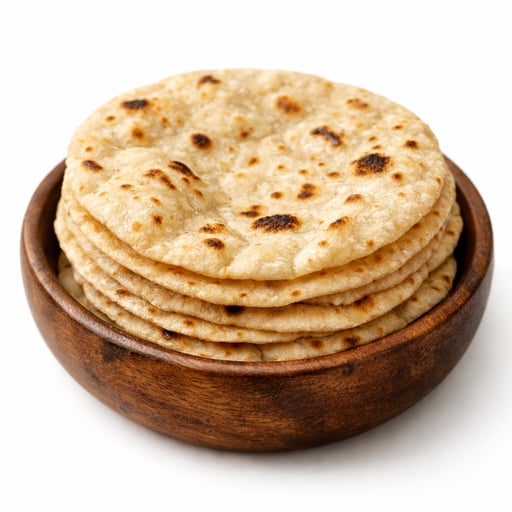
Roti
रोटी
Roti is a traditional Indian flatbread made from whole wheat flour, cooked on a hot griddle (tava). It is a staple accompaniment for many Indian meals, offering moderate calories and carbohydrates with a small amount of protein and fiber.
Nutrition per 100g
Nutrient Breakdown
% DV = % Daily Value (adult RDA, ICMR 2020). Values per 100g edible portion.
Use Roti in meal plans
17,000+ foods with real-time nutrient tracking, AI generation, and WhatsApp sharing.
Start FreeFree plan · No credit card
Common questions about Roti
How many calories are in 1 roti (~40g) of Roti?
1 roti (~40g) (40 g) of Roti has about 119 kcal, based on 297 kcal per 100 g.
How much protein is in Roti?
Roti provides about 9 g of protein per 100 g.
How is roti typically prepared and eaten?
Roti is made by rolling whole wheat dough into thin circles and cooking them on a hot tava, served as a staple bread with various Indian dishes.
Is roti suitable for vegetarians?
Yes, roti is vegetarian as it contains no animal products.
How should roti be stored to maintain freshness?
Cooked roti is best consumed fresh but can be stored wrapped in a cloth at room temperature for a few hours or refrigerated for up to 2 days.
About Roti
Roti, also known as chapati or phulka in various regions, is a staple Indian flatbread made from whole wheat flour and water, cooked on a tava (griddle) without leavening agents. It is widely consumed across India as an accompaniment to vegetable, lentil, or meat dishes, providing a versatile base for meals.
Its nutrition mainly comes from carbohydrates and some protein, with modest amounts of dietary fiber and very low fat, reflecting its simple preparation without added fats. Roti is vegetarian and naturally free from dairy, nuts, and gluten aside from wheat itself.
- Commonly eaten at all meals including breakfast, lunch and dinner
- Contains modest iron and some B vitamin folate
- Low in fat and sugars, making it a basic energy source
- Gluten present due to wheat flour
Roti fits into many Indian dietary patterns as a filling and culturally integral bread.
Values per 100g edible portion.
Nutrition data is for reference only. Values may vary by preparation method, brand, and region. Full disclaimer
Similar foods
Browse all →Ragi Roti
Multigrain Roti
Bajra Roti
Jowar Roti
ज्वार की रोटी
Chapati/Roti
Bread roll
ब्रेड रोल
Makki ki roti
मकई की रोटी
Bread, chapati or roti, plain, commercially prepared
रोटी