


 by Workfile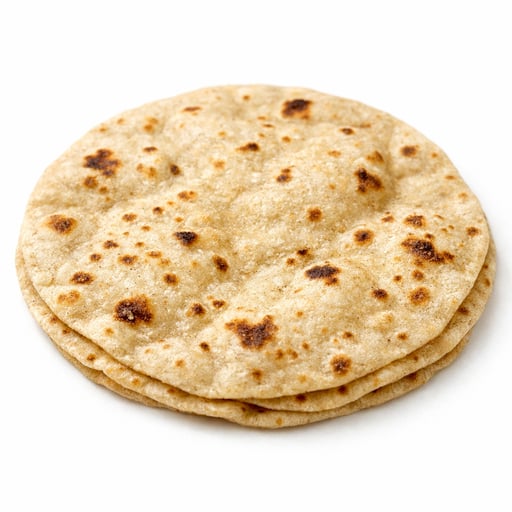
Bread, chapati or roti, plain, commercially prepared
रोटी
Chapati is a popular unleavened Indian flatbread made from whole wheat flour. It is commonly served with various curries and vegetables in Indian cuisine.
Nutrition per 100g
Nutrient Breakdown
Key Nutrients(17)
% DV = % Daily Value (adult RDA, ICMR 2020). Values per 100g edible portion.
Use Bread, chapati or roti, plain, commercially prepared in meal plans
17,000+ foods with real-time nutrient tracking, AI generation, and WhatsApp sharing.
Start FreeFree plan · No credit card
Common questions about Bread, chapati or roti, plain, commercially prepared
How many calories are in 1 roti of Bread, chapati or roti, plain, commercially prepared?
1 roti (50 g) of Bread, chapati or roti, plain, commercially prepared has about 149 kcal, based on 297 kcal per 100 g.
How much protein is in Bread, chapati or roti, plain, commercially prepared?
Bread, chapati or roti, plain, commercially prepared provides about 11.2 g of protein per 100 g.
How much sugar does Bread, chapati or roti, plain, commercially prepared contain?
Bread, chapati or roti, plain, commercially prepared has about 2.7 g of total sugars per 100 g.
What are common ways to eat commercially prepared chapati?
They are usually served with vegetables, dals, curries, or can be wrapped with fillings as a snack.
Is commercially prepared chapati vegan?
Yes, it is typically made from whole wheat flour and water without animal products.
How should commercially prepared chapati be stored?
Store in an airtight container at room temperature for short-term use, or refrigerate to extend shelf life.
About Bread, chapati or roti, plain, commercially prepared
Chapati, also known as Roti, is an essential part of Indian cuisine, made from whole wheat flour and made without any yeast or leavening agents. Chapatis are rolled into thin circles and cooked on a flat skillet until puffed and slightly charred.
Typically served with a variety of side dishes, such as dals, curries, or vegetables, chapatis are a source of complex carbohydrates, making them a staple in many Indian households. In addition to being vegetarian-friendly, chapatis are commonly consumed across different meals including breakfast, lunch, and dinner.
Nutritionally, chapatis provide fiber and some essential nutrients that contribute to a balanced diet. They are low in fat, but provide a decent amount of energy, which makes them a good choice for those looking to maintain or regulate their weight. People with dietary restrictions should be cautious of their sodium content, which is typically higher in commercially prepared variants.
Values per 100g edible portion.
Nutrition data is for reference only. Values may vary by preparation method, brand, and region. Full disclaimer
Similar foods
Browse all →
Bread, chapati or roti, whole wheat, commercially prepared, frozen
गेहूं की रोटी
Bread, naan, plain, commercially prepared, refrigerated
Bread, paratha, whole wheat, commercially prepared, frozen
Chapati/Roti
Bread, naan, whole wheat, commercially prepared, refrigerated
Bread, pita, whole-wheat
पीटा ब्रेड, होल व्हीट
Bread, whole-wheat, commercially prepared

Bread roll
ब्रेड रोल