


 by Workfile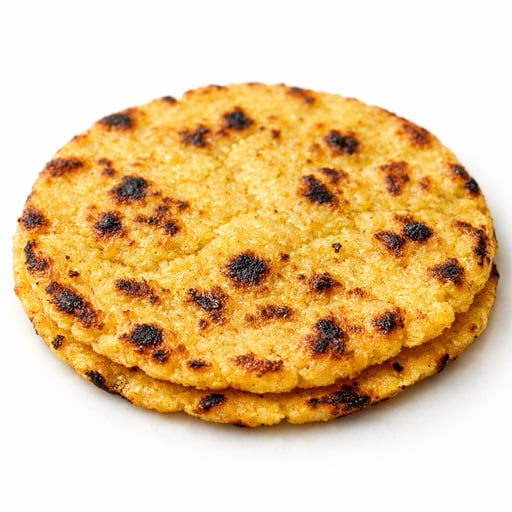
Makki ki roti
मकई की रोटी
Makki Ki Roti is a traditional Indian flatbread made from cornmeal, commonly eaten in North Indian cuisine, especially during winter months.
Nutrition per 100g
Nutrient Breakdown
Key Nutrients(14)
% DV = % Daily Value (adult RDA, ICMR 2020). Values per 100g edible portion.
Use Makki ki roti in meal plans
17,000+ foods with real-time nutrient tracking, AI generation, and WhatsApp sharing.
Start FreeFree plan · No credit card
Common questions about Makki ki roti
How many calories are in 1 roti of Makki ki roti?
1 roti (85 g) of Makki ki roti has about 224 kcal, based on 264 kcal per 100 g.
How much protein is in Makki ki roti?
Makki ki roti provides about 3.5 g of protein per 100 g.
How much sugar does Makki ki roti contain?
Makki ki roti has about 0.7 g of total sugars per 100 g.
What is Makki Ki Roti typically served with?
It is commonly served with sarson ka saag or other vegetable dishes in North Indian cuisine.
Is Makki Ki Roti suitable for a vegan diet?
Yes, it is made from cornmeal without any animal products and is therefore vegan.
How should Makki Ki Roti be stored?
Store Makki Ki Roti in an airtight container at room temperature for 1-2 days or refrigerate for longer freshness.
About Makki ki roti
Makki Ki Roti is a popular traditional flatbread made from ground maize (cornmeal) commonly consumed in Punjab and other parts of North India. It is traditionally prepared by mixing corn flour with hot water to form a dough, then rolled into flatbreads and cooked on a hot griddle. This food is cooked before consumption and typically enjoyed with accompaniments like sarson ka saag.
Nutritionally, this food has a moderate energy content around 210 kcal per 100g and contains significant dietary fiber (reflected by 21% daily value), which helps with digestion. It provides moderate protein and carbohydrate amounts, and minimal fat. Being plant-based, it contains no vitamin B12 or vitamin D but does offer trace minerals such as iron and zinc.
- Made primarily from cornmeal, this bread is an important staple in regional diets.
- Contains significant dietary fiber, supporting digestive health.
- Suitable for vegan diets.
Its distinct nutty flavor and coarse texture make it a favorite comfort food especially during colder seasons.
Values per 100g edible portion.
Nutrition data is for reference only. Values may vary by preparation method, brand, and region. Full disclaimer
Contains data from Indian Nutrient Databank (INDB), University of Edinburgh, licensed under CC BY 4.0, modified for presentation.
Report a data issueSimilar foods
Browse all →
Bread roll
ब्रेड रोल
Naan
नान
Chapati/Roti
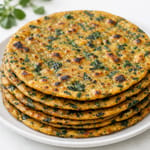
Methi thepla
मेथी थेपला
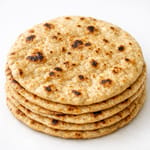
Soya roti
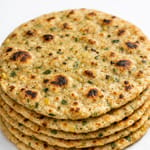
Paushtik roti
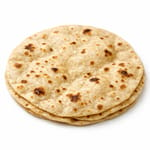
Bread, chapati or roti, plain, commercially prepared
रोटी
Ragi Roti