


 by Workfile
Cabbage, napa, cooked
नापा गोभी, पकी हुई
Brassica oleracea
Cooked napa cabbage is a mild-tasting leafy vegetable commonly used in Asian and Indian cuisines. It is low in calories and fat, with small amounts of essential vitamins and minerals.
Nutrition per 100g
Nutrient Breakdown
Key Nutrients(12)
% DV = % Daily Value (adult RDA, ICMR 2020). Values per 100g edible portion.
Use Cabbage, napa, cooked in meal plans
17,000+ foods with real-time nutrient tracking, AI generation, and WhatsApp sharing.
Start FreeFree plan · No credit card
Common questions about Cabbage, napa, cooked
How many calories are in cup of Cabbage, napa, cooked?
cup (109 g) of Cabbage, napa, cooked has about 13 kcal, based on 12 kcal per 100 g.
How much protein is in Cabbage, napa, cooked?
Cabbage, napa, cooked provides about 1.1 g of protein per 100 g.
How is cooked napa cabbage commonly used in cooking?
Cooked napa cabbage is often used in soups, stir-fries, and as a side vegetable in Asian and Indian cuisines.
Is cooked napa cabbage suitable for vegetarian and vegan diets?
Yes, cooked napa cabbage is a plant-based vegetable suitable for vegetarian and vegan diets.
What is the best way to store napa cabbage before cooking?
Store napa cabbage in the refrigerator in a plastic bag to keep it fresh, and use within a few days for best quality.
About Cabbage, napa, cooked
Napa cabbage, also known as Chinese cabbage, is a variety of cabbage with pale green leaves and a delicate texture. It is frequently cooked by steaming, boiling, or stir-frying and used in soups, salads, and vegetable dishes across various Asian cuisines.
This vegetable is low in calories and fat, making it a light addition to meals. It contains dietary fiber, vitamin C, folate, and small amounts of minerals such as calcium, potassium, and iron. Being vegan and naturally low in sodium, it suits many dietary patterns.
Its mild flavor and soft texture after cooking make it a versatile vegetable used in side dishes and mixed vegetable recipes. The nutrient composition may vary slightly depending on cooking methods and portion sizes.
Values per 100g edible portion.
Nutrition data is for reference only. Values may vary by preparation method, brand, and region. Full disclaimer
Similar foods
Browse all →Cabbage, napa, leaf, destemmed, raw
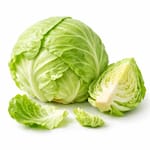
Raw cabbage
पत्तागोभी (कच्ची)
Cabbage, savoy, raw
Cabbage, bok choy, raw
Cabbage, green, raw
Cabbage, savoy, cooked, boiled, drained, with salt
सावॉय गोभी, पकाई हुई, उबली हुई, निथारी हुई, नमक के साथ
Cabbage, common, cooked, boiled, drained, with salt
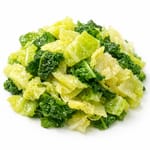
Cabbage, savoy, cooked, boiled, drained, without salt
सेवी गोभी, पकी हुई, उबली हुई, नमक के बिना