


 by Workfile
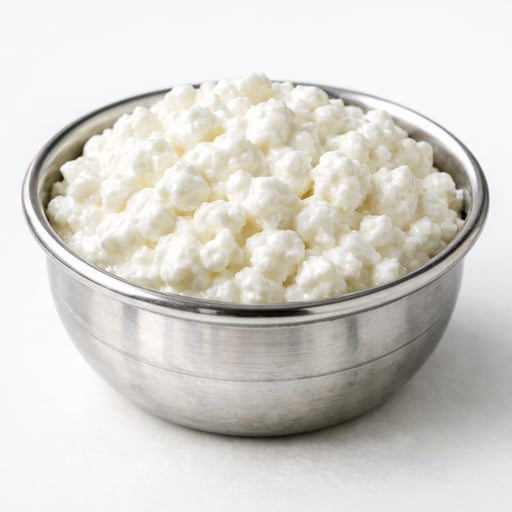
Cheese, cottage, creamed, large or small curd
Also known as: Cottage Cheese
Creamed cottage cheese is made from curdled milk with added cream, featuring a rich, mild flavor and soft texture.
Nutrition per 100g
Nutrient Breakdown
Key Nutrients(15)
% DV = % Daily Value (adult RDA, ICMR 2020). Values per 100g edible portion.
Use Cheese, cottage, creamed, large or small curd in meal plans
17,000+ foods with real-time nutrient tracking, AI generation, and WhatsApp sharing.
Start FreeFree plan · No credit card
Common questions about Cheese, cottage, creamed, large or small curd
How many calories are in oz of Cheese, cottage, creamed, large or small curd?
oz (113 g) of Cheese, cottage, creamed, large or small curd has about 111 kcal, based on 98 kcal per 100 g.
How much protein is in Cheese, cottage, creamed, large or small curd?
Cheese, cottage, creamed, large or small curd provides about 11.1 g of protein per 100 g.
How much sugar does Cheese, cottage, creamed, large or small curd contain?
Cheese, cottage, creamed, large or small curd has about 2.7 g of total sugars per 100 g.
Is creamed cottage cheese vegetarian?
Yes, creamed cottage cheese is vegetarian as it contains no meat, fish, or eggs, but it does contain dairy.
How is creamed cottage cheese typically used in cooking?
It is commonly used as a spread, in salads, mixed into dishes for creaminess, or eaten plain as a snack.
How should creamed cottage cheese be stored?
It should be stored refrigerated and consumed before the expiry date for best freshness.
About Cheese, cottage, creamed, large or small curd
Creamed cottage cheese is a fresh dairy product made by curdling milk and blending in cream, producing a rich and spreadable cheese with either large or small curds. It originates from traditional dairy processing methods common worldwide and is popularly used in Indian and Western cuisines as a snack, spread, or ingredient in cooking.
- Rich in protein: Contains a significant amount of protein per 100g.
- Rich in selenium: Provides important trace minerals.
- Rich in phosphorus: Supplies essential minerals important for bone health.
This cheese is vegetarian, contains dairy allergens, and is best consumed fresh or refrigerated. It does not contain added sugars but has natural milk sugars.
Values per 100g edible portion.
Nutrition data is for reference only. Values may vary by preparation method, brand, and region. Full disclaimer
Similar foods
Browse all →Cheese, cottage, nonfat, uncreamed, dry, large or small curd
Cheese, cottage, creamed, with fruit
Cottage cheese, full fat, large or small curd
Cheese, cottage, with vegetables
Cream cheese
Cream, sour, cultured
Cheese, cottage, lowfat, 1% milkfat
Cheese, cottage, lowfat, 2% milkfat