


 by Workfile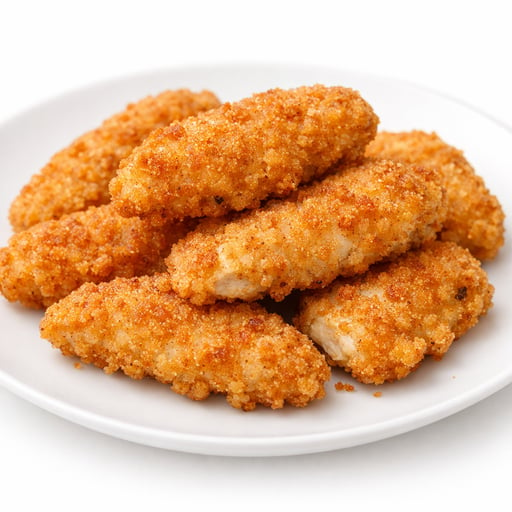
Chicken breast tenders, breaded, cooked, microwaved
चिकन ब्रेस्ट टेंडर्स, ब्रेडेड, पकाया हुआ, माइक्रोवेव में
Breaded and microwaved chicken breast tenders, popular as a snack or meal component, providing significant protein and key B vitamins.
Nutrition per 100g
Nutrient Breakdown
Key Nutrients(16)
% DV = % Daily Value (adult RDA, ICMR 2020). Values per 100g edible portion.
Use Chicken breast tenders, breaded, cooked, microwaved in meal plans
17,000+ foods with real-time nutrient tracking, AI generation, and WhatsApp sharing.
Start FreeFree plan · No credit card
Common questions about Chicken breast tenders, breaded, cooked, microwaved
How many calories are in 1 piece of Chicken breast tenders, breaded, cooked, microwaved?
1 piece (50 g) of Chicken breast tenders, breaded, cooked, microwaved has about 126 kcal, based on 252 kcal per 100 g.
How much protein is in Chicken breast tenders, breaded, cooked, microwaved?
Chicken breast tenders, breaded, cooked, microwaved provides about 16.4 g of protein per 100 g.
How is breaded chicken breast tender typically prepared?
They are usually coated in a seasoned breadcrumb mixture and cooked by frying or microwaving to achieve a crispy exterior.
Is this food suitable for a non-vegetarian diet?
Yes, it contains chicken and is classified as non-vegetarian.
What is the recommended storage for breaded chicken tenders?
Store refrigerated and consume within 1-2 days after cooking or freeze for longer storage.
About Chicken breast tenders, breaded, cooked, microwaved
Breaded chicken breast tenders are strips of chicken breast coated with a seasoned crumb mixture and cooked, in this case using a microwave which reduces added fat compared to deep frying. Commonly enjoyed as a protein-rich snack or part of meals, these tenders provide high protein content along with significant amounts of niacin (Vitamin B3) and selenium, important nutrients for energy metabolism and antioxidant defense. They also contain notable amounts of vitamin B12 and phosphorus. Due to the breading, sodium is moderately elevated.
- Typical portion sizes include single pieces or katori servings.
- This food is classified as non-vegetarian and contains gluten from the breading.
- Suitable for lunch, dinner, or snacks.
- Contains no vitamin C or vitamin D.
Values per 100g edible portion.
Nutrition data is for reference only. Values may vary by preparation method, brand, and region. Full disclaimer
Similar foods
Browse all →
Chicken breast tenders, breaded, uncooked
ब्रेडेड चिकन स्तन के टेंडर, कच्चा
Chicken tenders, breaded, frozen, prepared
Chicken, wing, frozen, glazed, barbecue flavored, heated (microwave)
Chicken, broiler or fryers, breast, skinless, boneless, meat only, cooked, braised
Chicken, thighs, frozen, breaded, reheated
Chicken, broilers or fryers, breast, meat only, cooked, fried
Chicken, breast, boneless, skinless, raw