

 by Workfile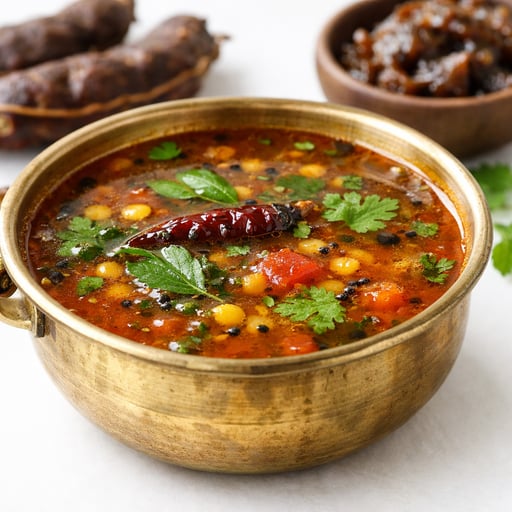
Rasam with tamarind
Also known as: RASAM WITH TAMARIND, Puli rasam/ Chintapandu rasam/ Charu/Saaru
Rasam with tamarind is a tangy and lightly spiced South Indian soup typically served with rice or consumed as a beverage. It features tamarind pulp, spices, and herbs, making it a flavorful and digestive aid commonly enjoyed across Indian meals.
Nutrition per 100g
Nutrient Breakdown
Key Nutrients(14)
% DV = % Daily Value (adult RDA, ICMR 2020). Values per 100g edible portion.
Use Rasam with tamarind in meal plans
17,000+ foods with real-time nutrient tracking, AI generation, and WhatsApp sharing.
Start FreeFree plan · No credit card
Common questions about Rasam with tamarind
How many calories are in 1 curry bowl of Rasam with tamarind?
1 curry bowl (390 g) of Rasam with tamarind has about 104 kcal, based on 27 kcal per 100 g.
How much protein is in Rasam with tamarind?
Rasam with tamarind provides about 1.1 g of protein per 100 g.
How much sugar does Rasam with tamarind contain?
Rasam with tamarind has about 0.8 g of total sugars per 100 g.
Is rasam with tamarind suitable for a vegan diet?
Yes, rasam with tamarind is vegan as it contains no animal-derived ingredients.
What is rasam with tamarind typically eaten with?
It is commonly served as a soup or side dish with steamed rice or eaten as a light soup.
How should I store rasam with tamarind?
Store cooked rasam in a covered container in the refrigerator and consume within 2-3 days for best freshness.
About Rasam with tamarind
Rasam with tamarind is a traditional South Indian soup known for its tangy and aromatic flavor derived from tamarind pulp combined with spices like black pepper, mustard seeds, cumin, and curry leaves. It is commonly served alongside rice or consumed as a light soup.
This dish is prepared by boiling tamarind extract with tomatoes, cooked lentils, and a blend of spices, then tempered with mustard seeds and dried red chilies. It's a staple in Tamil Nadu and Kerala households and valued for its distinctive sour and spicy taste.
In terms of nutrition, rasam with tamarind is low in calories and fat, making it a light addition to meals. While it does not provide notable amounts of macronutrients, it contains a significant amount of Vitamin K, contributing about 24% of the daily value per 100g, which plays a role in blood clotting and bone health.
- Low calorie and fat content
- Contains significant Vitamin K
- Vegan and gluten-free dish
Rasam is suited for various meals throughout the day and complements Indian rice dishes well.
Values per 100g edible portion.
Nutrition data is for reference only. Values may vary by preparation method, brand, and region. Full disclaimer
Contains data from Indian Nutrient Databank (INDB), University of Edinburgh, licensed under CC BY 4.0, modified for presentation.
Report a data issue