

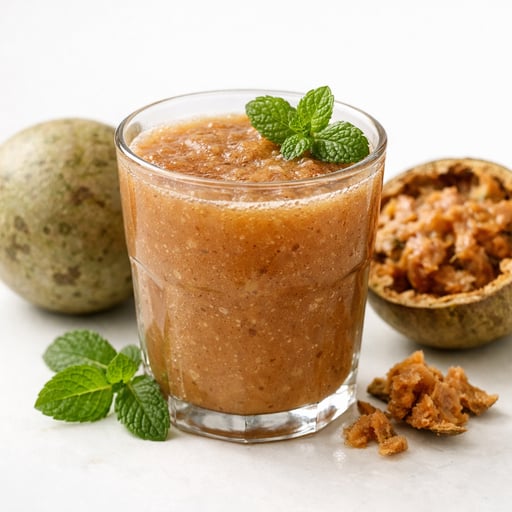
Woodapple juice
Also known as: Wood apple juice, Bel ka sharbat
Woodapple juice is a popular traditional Indian beverage made from the pulp of ripe woodapple fruit, often consumed for its distinct tangy-sweet flavor and cooling properties.
Nutrition per 100ml
Nutrient Breakdown
Key Nutrients(13)
% DV = % Daily Value (adult RDA, ICMR 2020). Values per 100ml edible portion.
Use Woodapple juice in meal plans
17,000+ foods with real-time nutrient tracking, AI generation, and WhatsApp sharing.
Start FreeFree plan · No credit card
Common questions about Woodapple juice
How many calories are in 1 glass of Woodapple juice?
1 glass (351 ml) of Woodapple juice has about 120 kcal, based on 34 kcal per 100 ml.
How much protein is in Woodapple juice?
Woodapple juice provides about 0.6 g of protein per 100 ml.
How much sugar does Woodapple juice contain?
Woodapple juice has about 5.8 g of total sugars per 100 ml.
Is woodapple juice suitable for vegetarians and vegans?
Yes, woodapple juice is plant-based and suitable for both vegetarians and vegans.
How is woodapple juice typically consumed in India?
It is usually prepared by extracting pulp from ripe woodapple fruit, diluting it with water, and straining before drinking as a refreshing beverage.
How should woodapple juice be stored?
Keep woodapple juice refrigerated and consume within 24-48 hours for best freshness.
About Woodapple juice
Woodapple (Aegle marmelos), also known as bael, is a fruit native to India and surrounding regions. The juice extracted from the ripe pulp is enjoyed as a refreshing drink, especially in summer months. It has a unique tangy and somewhat sweet taste, often diluted with water and strained before consumption.
Nutritionally, woodapple juice is low in fat and protein but provides carbohydrates mainly from natural sugars. It contains modest amounts of vitamin C, potassium, and small quantities of calcium and iron. The juice is vegan and free from common allergens.
This beverage fits well in traditional Indian diets as a cooling and hydrating drink. Its glycemic index is low to medium, reflecting its natural sugar content and fiber presence in the pulp residue.
- Typical Indian serving sizes vary from 100 ml (1 katori) to 200 ml (1 glass).
- Contains no animal products, gluten, or nuts.
- Suitable for vegetarians and vegans.
Values per 100ml edible portion.
Nutrition data is for reference only. Values may vary by preparation method, brand, and region. Full disclaimer
Contains data from Indian Nutrient Databank (INDB), University of Edinburgh, licensed under CC BY 4.0, modified for presentation.
Report a data issueSimilar foods
Browse all →Wood Apple
Kaith
Apple and honey sorbet
Beverages, Apple juice drink, light, fortified with vitamin C
Beverages, cranberry-apple juice drink, bottled

Apple jam
Fruit drink, apple juice
Apple juice, canned or bottled, unsweetened, with added ascorbic acid
Juice, apple, grape and pear blend, with added ascorbic acid and calcium