


 by Workfile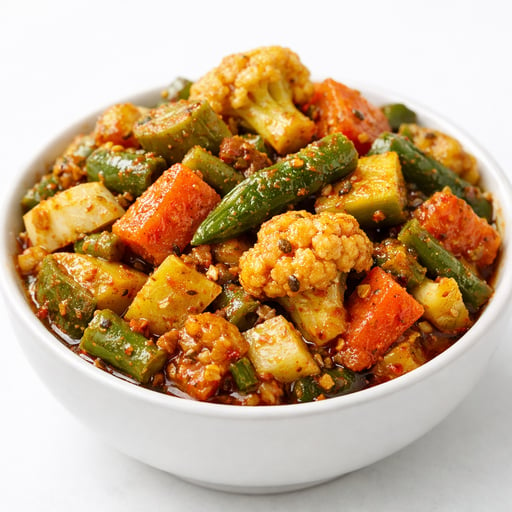
Mixed vegetable pickle
Also known as: Mixed Vegetable Pickle, Sabziyoon ka achaar
A tangy and spicy Indian mixed vegetable pickle commonly served as a condiment alongside meals. It contains a notable amount of sodium and vitamin C.
Nutrition per 100g
Nutrient Breakdown
Key Nutrients(14)
% DV = % Daily Value (adult RDA, ICMR 2020). Values per 100g edible portion.
Use Mixed vegetable pickle in meal plans
17,000+ foods with real-time nutrient tracking, AI generation, and WhatsApp sharing.
Start FreeFree plan · No credit card
Common questions about Mixed vegetable pickle
How many calories are in 1 unknown of Mixed vegetable pickle?
1 unknown (100 g) of Mixed vegetable pickle has about 211 kcal, based on 211 kcal per 100 g.
How much protein is in Mixed vegetable pickle?
Mixed vegetable pickle provides about 1.9 g of protein per 100 g.
How much sugar does Mixed vegetable pickle contain?
Mixed vegetable pickle has about 2.8 g of total sugars per 100 g.
How is mixed vegetable pickle typically used in meals?
It is commonly served as a condiment to add tanginess and spice to meals like rice, dal, and roti.
Is mixed vegetable pickle suitable for vegetarians?
Yes, mixed vegetable pickle is a vegetarian condiment made from vegetables and spices without any animal products.
What is the reason for the high sodium content in mixed vegetable pickle?
Pickling involves preservation with salt, which results in a high sodium content to help preserve the vegetables and add flavor.
About Mixed vegetable pickle
Mixed Vegetable Pickle is a popular Indian condiment made from a combination of various vegetables preserved in spices, oil, and salt. It is traditionally used to add a burst of flavor to meals, enhancing the taste of simple dishes like rice, dal, and roti.
- The pickle is high in sodium, contributing to its distinctive salty taste.
- It provides significant vitamin C, which is uncommon in preserved condiments.
- It also contains measurable amounts of vitamin K.
This food is vegetarian and generally does not contain any animal products. Due to its high salt content, it should be consumed in moderation, especially by individuals monitoring sodium intake.
Values per 100g edible portion.
Nutrition data is for reference only. Values may vary by preparation method, brand, and region. Full disclaimer
Contains data from Indian Nutrient Databank (INDB), University of Edinburgh, licensed under CC BY 4.0, modified for presentation.
Report a data issueSimilar foods
Browse all →
Mango pickle
Vegetable mix
Potato pickle
Brinjal pickle
Garlic pickle
Green tomato pickle
Date pickle
Gooseberry pickle