


 by Workfile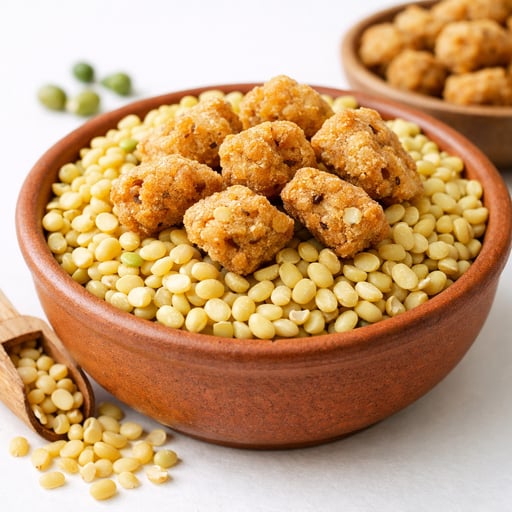
Moong dal with vadi
Also known as: MOONG DAL WITH VADI
A traditional Indian dish combining cooked moong dal with fried moong vadi balls, offering a blend of lentil protein and lightly spiced fried snacks.
Nutrition per 100g
Nutrient Breakdown
Key Nutrients(14)
% DV = % Daily Value (adult RDA, ICMR 2020). Values per 100g edible portion.
Use Moong dal with vadi in meal plans
17,000+ foods with real-time nutrient tracking, AI generation, and WhatsApp sharing.
Start FreeFree plan · No credit card
Common questions about Moong dal with vadi
How many calories are in 1 curry bowl of Moong dal with vadi?
1 curry bowl (362 g) of Moong dal with vadi has about 87 kcal, based on 24 kcal per 100 g.
How much protein is in Moong dal with vadi?
Moong dal with vadi provides about 0.4 g of protein per 100 g.
How much sugar does Moong dal with vadi contain?
Moong dal with vadi has about 0.4 g of total sugars per 100 g.
Is Moong Dal with Vadi suitable for a vegetarian diet?
Yes, Moong Dal with Vadi is a vegetarian dish, made without meat, fish, or eggs.
What are common ways to serve Moong Dal with Vadi?
It is typically served hot as a side dish with rice or Indian bread like chapati or roti during lunch or dinner.
How should Moong Dal with Vadi be stored?
Store it in an airtight container in the refrigerator and consume within 2-3 days for best quality.
About Moong dal with vadi
Moong Dal with Vadi is a popular Indian dish featuring cooked split yellow moong dal mixed with vadi—deep-fried fritters made from seasoned moong dal batter. It originates from various regions of India where moong dal is a staple ingredient.
Typically served as a snack or alongside rice and vegetables, this dish combines the softness of cooked dal with the crispy texture of the vadi. The preparation involves soaking and grinding moong dal, spicing the batter, and frying small portions to make vadi. When combined with cooked dal, it offers a balanced mix of protein, carbohydrates, and fats.
Nutritionally, this dish provides an appreciable amount of plant-based protein and dietary fiber. The frying step adds fat, mostly from cooking oil, increasing energy content. It contains minimal sugars and moderate sodium levels due to added salt in cooking.
Suitable for vegetarian diets, it contains no animal products, dairy, or eggs. It is generally safe for most diets but contains moderate fat due to frying. Vitamins and minerals such as iron, potassium, calcium, and folate are present in modest amounts.
Values per 100g edible portion.
Nutrition data is for reference only. Values may vary by preparation method, brand, and region. Full disclaimer
Contains data from Indian Nutrient Databank (INDB), University of Edinburgh, licensed under CC BY 4.0, modified for presentation.
Report a data issueSimilar foods
Browse all →
Dal moong
Whole moong
Moong dal kheer
Moong dal mixture
Moong dal halwa
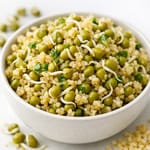
Sprouted moong daliya
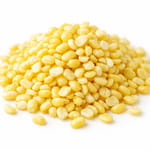
Washed moong dal
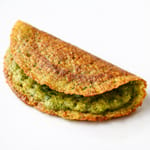
Moong bean dosa