


 by Workfile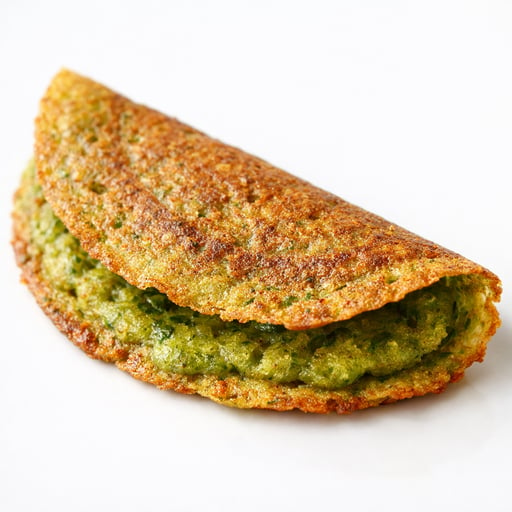
Moong bean dosa
Also known as: Pesarattu
Moong Bean Dosa is a popular South Indian crepe made from ground yellow moong dal. It is a savory, gluten-free vegan dish commonly consumed for breakfast or snacks.
Nutrition per 100g
Nutrient Breakdown
Key Nutrients(20)
% DV = % Daily Value (adult RDA, ICMR 2020). Values per 100g edible portion.
Use Moong bean dosa in meal plans
17,000+ foods with real-time nutrient tracking, AI generation, and WhatsApp sharing.
Start FreeFree plan · No credit card
Common questions about Moong bean dosa
How many calories are in 1 pesarattu of Moong bean dosa?
1 pesarattu (27 g) of Moong bean dosa has about 77 kcal, based on 286 kcal per 100 g.
How much protein is in Moong bean dosa?
Moong bean dosa provides about 12.3 g of protein per 100 g.
How much sugar does Moong bean dosa contain?
Moong bean dosa has about 2.9 g of total sugars per 100 g.
Is moong bean dosa suitable for a vegan diet?
Yes, moong bean dosa is made from moong dal and does not contain any animal products, making it suitable for vegans.
What is moong bean dosa typically served with?
Moong bean dosa is commonly served with chutneys like coconut or tomato chutney, and sometimes with sambar (a lentil-based stew).
How should I store moong bean dosa?
Store cooked moong bean dosa in an airtight container in the refrigerator and consume within 1-2 days. It can be reheated on a skillet or microwave.
About Moong bean dosa
Moong Bean Dosa is a traditional South Indian dish made primarily from soaked, ground yellow moong dal, which is fermented slightly before cooking into thin, savory pancakes. This dish is commonly eaten across India as breakfast or a light snack. It is naturally gluten-free and vegan, making it suitable for various dietary preferences.
Nutritionally, Moong Bean Dosa provides a good source of protein and is notably high in selenium, copper, manganese, phosphorus, vitamin E, magnesium, and folate (B9), according to verified nutrient data. These micronutrients contribute to its nutritional richness compared to traditional rice-based dosas.
This dish is typically cooked with minimal oil, resulting in low fat content but substantial protein and carbohydrate contribution. It is a wholesome and balanced option that fits well into an energy-conscious diet and is suitable for individuals seeking plant-based protein options.
- Made from yellow moong dal (mung beans)
- Naturally vegan and gluten-free
- High in selenium and copper
- Provides significant manganese and folate
- Commonly eaten at breakfast or as a snack
Values per 100g edible portion.
Nutrition data is for reference only. Values may vary by preparation method, brand, and region. Full disclaimer
Contains data from Indian Nutrient Databank (INDB), University of Edinburgh, licensed under CC BY 4.0, modified for presentation.
Report a data issueSimilar foods
Browse all →
Dal moong
Moong dal with vadi
Whole moong
Moong dal halwa
Sprouted moong daliya
Moong dal kheer
Moong dal mixture
Semolina dosa