


 by Workfile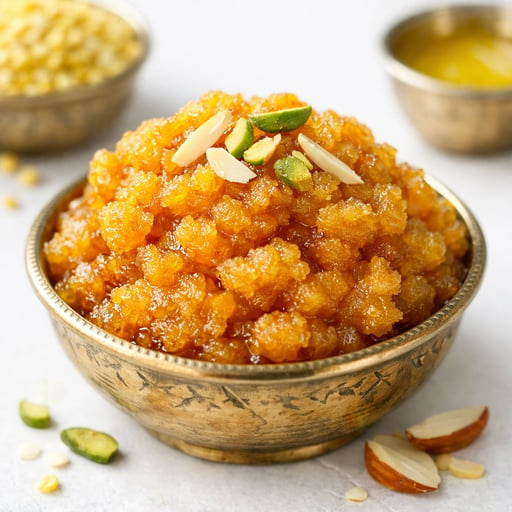
Moong dal halwa
Also known as: Moong Dal Halwa
Moong Dal Halwa is a popular North Indian dessert made by slow-cooking yellow moong dal with ghee and sugar until it forms a rich, sweet pudding-like dish. It is commonly served during festivals and special occasions.
Nutrition per 100g
Nutrient Breakdown
Key Nutrients(17)
% DV = % Daily Value (adult RDA, ICMR 2020). Values per 100g edible portion.
Use Moong dal halwa in meal plans
17,000+ foods with real-time nutrient tracking, AI generation, and WhatsApp sharing.
Start FreeFree plan · No credit card
Common questions about Moong dal halwa
How many calories are in 1 bowl of Moong dal halwa?
1 bowl (95 g) of Moong dal halwa has about 332 kcal, based on 350 kcal per 100 g.
How much protein is in Moong dal halwa?
Moong dal halwa provides about 8.4 g of protein per 100 g.
How much sugar does Moong dal halwa contain?
Moong dal halwa has about 25.6 g of total sugars per 100 g.
Is Moong Dal Halwa vegetarian?
Yes, Moong Dal Halwa is a vegetarian dessert made from moong dal, ghee, and sugar.
What is Moong Dal Halwa commonly eaten with?
It is commonly eaten on its own as a dessert or festive sweet, often served warm.
How should Moong Dal Halwa be stored?
Store Moong Dal Halwa in an airtight container in a cool place or refrigerated to maintain freshness for several days.
About Moong dal halwa
Moong Dal Halwa is a traditional Indian sweet originating primarily from northern regions of India. It is prepared by soaking and grinding yellow moong dal, which is then slow-cooked in ghee and sweetened with sugar. The result is a rich, fragrant halwa with a slightly nutty flavor and a smooth, dense texture.
This dessert is often garnished with nuts and cardamom, making it a festive favorite especially during celebrations like Diwali. Despite being rich and calorie-dense due to the ghee and sugar content, it contains notable amounts of minerals such as selenium, copper, and phosphorus, which are important nutrients as indicated by its nutrient profile.
- Traditionally served warm
- Commonly prepared at home or available at sweet shops
- Suitable for vegetarians as it contains no meat or eggs
Values per 100g edible portion.
Nutrition data is for reference only. Values may vary by preparation method, brand, and region. Full disclaimer
Contains data from Indian Nutrient Databank (INDB), University of Edinburgh, licensed under CC BY 4.0, modified for presentation.
Report a data issueSimilar foods
Browse all →
Moong dal kheer
Dal moong
Moong dal mixture
Whole moong
Moong dal with vadi
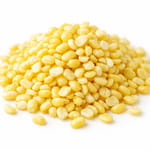
Washed moong dal
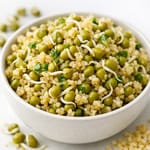
Sprouted moong daliya
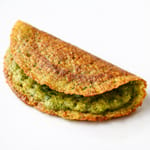
Moong bean dosa