


 by Workfile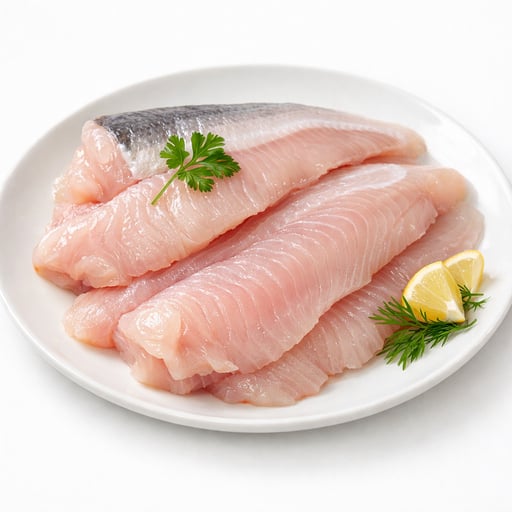
Pangas
Pangasianodon hypophthalmus
Also known as: Iridescent shark, Shark catfish, [Place of collection: Kolkata]
Pangas is a popular freshwater fish commonly used in Indian cooking, especially in eastern and southern regions. It is known for its mild taste and firm texture, making it suitable for a variety of cooked dishes.
Nutrition per 100g
Nutrient Breakdown
Key Nutrients(15)
% DV = % Daily Value (adult RDA, ICMR 2020). Values per 100g edible portion.
Use Pangas in meal plans
17,000+ foods with real-time nutrient tracking, AI generation, and WhatsApp sharing.
Start FreeFree plan · No credit card
Common questions about Pangas
How many calories are in 1 glass (200ml) of Pangas?
1 glass (200ml) (200 g) of Pangas has about 407 kcal, based on 204 kcal per 100 g.
How much protein is in Pangas?
Pangas provides about 17.1 g of protein per 100 g.
How is Pangas typically cooked in Indian cuisine?
Pangas is commonly fried, steamed, or used in curries in Indian cuisine.
Is Pangas suitable for vegetarian diets?
No, Pangas is a fish and thus classified as non-vegetarian.
How should Pangas fish be stored?
Pangas should be kept refrigerated and consumed fresh or frozen to maintain quality and safety.
About Pangas
Pangas, also known as Pangasius, is a freshwater fish widely consumed in India and Southeast Asia. It is farmed extensively and appreciated for its mild flavor and versatility in cooking methods such as frying, steaming, and currying. This fish is a good source of high-quality protein and provides essential minerals like phosphorus, selenium, and chromium. Notably, pangas contains very high amounts of vitamin B6 and biotin, which are important vitamins involved in energy metabolism and skin health respectively. It contains moderate levels of vitamin E, a fat-soluble antioxidant. Being a fish, it fits into the non-vegetarian dietary category and is commonly available cooked and ready to eat. Pangas is suitable for lunch and dinner meal occasions.
- High in Vitamin B6 and Biotin
- Provides good amounts of Selenium and Phosphorus
- Contains significant Vitamin E and Chromium
This makes Pangas a nutritious seafood option for balanced diets. It contains no carbohydrates or sugars naturally, and its sodium content depends mainly on cooking methods. Those managing sodium intake should consider added salt during preparation.
Allergen note: As a fish, pangas is a potential allergen. Always ensure freshness and proper storage to maintain quality.
Values per 100g edible portion.
Nutrition data is for reference only. Values may vary by preparation method, brand, and region. Full disclaimer
Similar foods
Browse all →Cat fish

Shark, hammer head
Tiger prawns

Spotted shark
Gold fish

Shark
Freshwater Eel
Eggs, Cat fish