


 by Workfile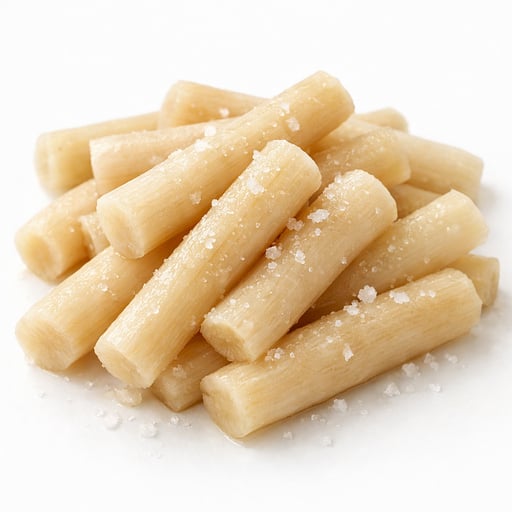
Salsify, cooked, boiled, drained, with salt
सल्सिफ़ी, पका हुआ, उबला हुआ, निथारा हुआ, नमक के साथ
Salsify is a root vegetable cooked by boiling and typically drained with salt added, popular for its mild flavor and used like other root vegetables.
Nutrition per 100g
Nutrient Breakdown
Key Nutrients(12)
% DV = % Daily Value (adult RDA, ICMR 2020). Values per 100g edible portion.
Use Salsify, cooked, boiled, drained, with salt in meal plans
17,000+ foods with real-time nutrient tracking, AI generation, and WhatsApp sharing.
Start FreeFree plan · No credit card
Common questions about Salsify, cooked, boiled, drained, with salt
How many calories are in cup slices of Salsify, cooked, boiled, drained, with salt?
cup slices (135 g) of Salsify, cooked, boiled, drained, with salt has about 92 kcal, based on 68 kcal per 100 g.
How much protein is in Salsify, cooked, boiled, drained, with salt?
Salsify, cooked, boiled, drained, with salt provides about 2.7 g of protein per 100 g.
How much sugar does Salsify, cooked, boiled, drained, with salt contain?
Salsify, cooked, boiled, drained, with salt has about 2.9 g of total sugars per 100 g.
How is salsify commonly used in cooking?
Salsify is commonly peeled, boiled until tender, drained, and seasoned with salt. It can be added to curries, stir-fries, or eaten as a vegetable side dish.
Is salsify suitable for vegan diets?
Yes, salsify is a plant-based root vegetable and is suitable for vegan diets.
How should salsify be stored?
Fresh salsify should be stored in a cool, ventilated place and used within a few days. Cooked salsify can be refrigerated and consumed within 2-3 days.
About Salsify, cooked, boiled, drained, with salt
Salsify is a root vegetable often referred to as the "oyster plant" due to its slight oyster-like taste. It is typically prepared by peeling and boiling until tender, then drained and seasoned with salt. This vegetable is mostly cultivated in temperate regions and enjoyed for its delicate flavor and starchy texture.
- It provides modest calories primarily from carbohydrates, with low fat content.
- Contains dietary fiber which aids digestion.
- Includes minerals like potassium and calcium, with small amounts of iron and zinc.
- Contains negligible vitamin A and small vitamins C and folate.
As a vegan vegetable with low fat and moderate fiber, it fits well in varied Indian meals focused on vegetables and root crops.
Values per 100g edible portion.
Nutrition data is for reference only. Values may vary by preparation method, brand, and region. Full disclaimer
Similar foods
Browse all →
Salsify, cooked, boiled, drained, without salt
सल्सिफ़ी, उबला हुआ, बिना नमक
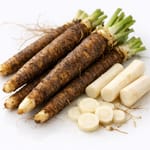
Salsify, (vegetable oyster), raw
सल्सिफ़ाई (ऑयस्टर सब्ज़ी), कच्चा
Salsify, boiled/cooked in water
Cooked salsify
Squash, summer, scallop, cooked, boiled, drained, with salt
Salsify, flesh only, boiled in unsalted water
Squash, winter, spaghetti, cooked, boiled, drained, or baked, with salt
Purslane, cooked, boiled, drained, with salt