
 by Workfile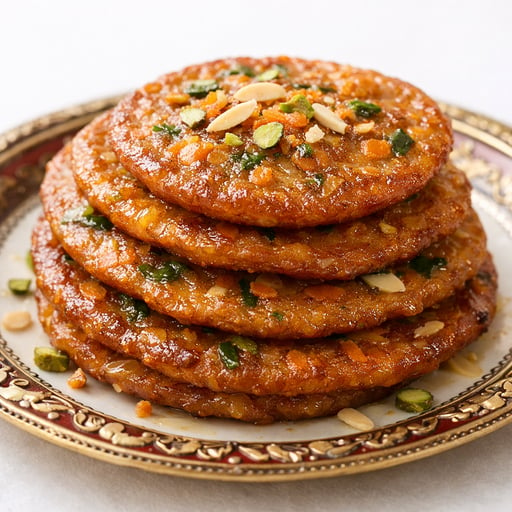
Vegetable pancake
सब्ज़ी पैनकेक
A nutritious and tasty pancake made from assorted vegetables, commonly enjoyed as a snack or light meal.
Nutrition per 100g
Nutrient Breakdown
Key Nutrients(16)
% DV = % Daily Value (adult RDA, ICMR 2020). Values per 100g edible portion.
Use Vegetable pancake in meal plans
17,000+ foods with real-time nutrient tracking, AI generation, and WhatsApp sharing.
Start FreeFree plan · No credit card
Common questions about Vegetable pancake
How many calories are in 1 pancake of Vegetable pancake?
1 pancake (117 g) of Vegetable pancake has about 146 kcal, based on 125 kcal per 100 g.
How much protein is in Vegetable pancake?
Vegetable pancake provides about 3.9 g of protein per 100 g.
How much sugar does Vegetable pancake contain?
Vegetable pancake has about 2.1 g of total sugars per 100 g.
What are common uses of vegetable pancake?
It is typically eaten as a breakfast item, savory snack, or light dinner in Indian cuisine.
Is vegetable pancake vegetarian or vegan?
This pancake is vegetarian and can be vegan if prepared without dairy or eggs.
How should vegetable pancakes be stored?
Store cooked pancakes in an airtight container in the refrigerator for up to 2 days. Reheat before serving.
About Vegetable pancake
Vegetable pancakes are a delightful way to incorporate vegetables into your diet in a tasty form. Typically made with a blend of flour and finely chopped vegetables, these pancakes are pan-fried to a crispy finish. They are popular in various cuisines and can be customized with spices and herbs to enhance their flavor.
Nutritionally, vegetable pancakes offer a mix of carbohydrates and proteins, complemented by essential vitamins and minerals from the vegetables used. They are ideal for a quick snack or as a light meal option, making them suitable for both adults and children. Keep in mind that the sodium content can vary depending on added salt and sauces, so it's best to prepare with mindful seasoning.
Values per 100g edible portion.
Nutrition data is for reference only. Values may vary by preparation method, brand, and region. Full disclaimer
Contains data from Indian Nutrient Databank (INDB), University of Edinburgh, licensed under CC BY 4.0, modified for presentation.
Report a data issueSimilar foods
Browse all →Potato pancakes
Pancake
Khoa and coconut pancake
Cheese and tomato pancake
Jam and fruit pancake
Bacon and mushroom pancake
Pancakes, stuffed with vegetables, homemade
Pancakes, stuffed with vegetables, wholemeal, homemade