


 by Workfile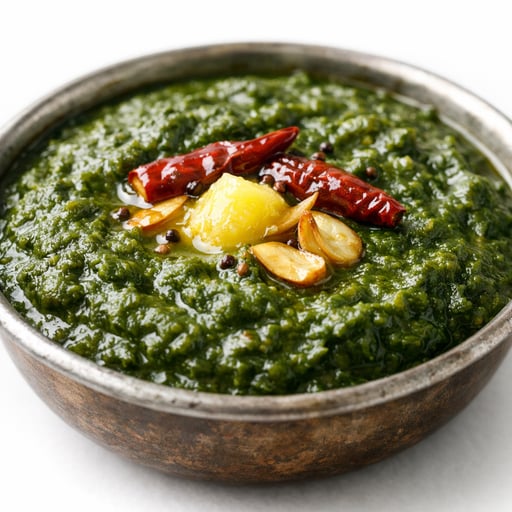
Sarson ka saag
Also known as: Sarson Ka Saag
A traditional North Indian cooked greens dish made primarily from mustard leaves and spices, commonly eaten with maize flatbreads.
Nutrition per 100g
Nutrient Breakdown
Key Nutrients(16)
% DV = % Daily Value (adult RDA, ICMR 2020). Values per 100g edible portion.
Use Sarson ka saag in meal plans
17,000+ foods with real-time nutrient tracking, AI generation, and WhatsApp sharing.
Start FreeFree plan · No credit card
Common questions about Sarson ka saag
How many calories are in 1 bowl of Sarson ka saag?
1 bowl (141 g) of Sarson ka saag has about 124 kcal, based on 88 kcal per 100 g.
How much protein is in Sarson ka saag?
Sarson ka saag provides about 3 g of protein per 100 g.
How much sugar does Sarson ka saag contain?
Sarson ka saag has about 0.8 g of total sugars per 100 g.
Is Sarson Ka Saag suitable for a vegetarian diet?
Yes, Sarson Ka Saag is a vegetarian dish made from mustard greens and spices without any meat or animal products other than dairy.
How is Sarson Ka Saag commonly eaten?
It is commonly served with makki di roti (maize flatbread) and enjoyed as a warming meal, especially in northern India during winter.
How should Sarson Ka Saag be stored?
Store Sarson Ka Saag in a sealed container in the refrigerator and consume within 2-3 days for best freshness and safety.
About Sarson ka saag
Sarson Ka Saag is a popular leafy green dish from North India, especially Punjab, made by cooking mustard leaves (sarson) along with other greens like bathua and spinach. It is traditionally consumed in winter and served with makki ki roti (cornflatbread). The dish is known for its unique, slightly bitter and earthy flavor combined with spices and occasional additions like ghee or butter.
- Contains moderate protein and dietary fiber.
- Provides useful amounts of calcium, iron, potassium, vitamin A, vitamin C, and folate.
- It is vegetarian and typically free of common allergens.
Sarson Ka Saag is a wholesome vegetable preparation that fits well in balanced Indian meals during the colder months.
Values per 100g edible portion.
Nutrition data is for reference only. Values may vary by preparation method, brand, and region. Full disclaimer
Contains data from Indian Nutrient Databank (INDB), University of Edinburgh, licensed under CC BY 4.0, modified for presentation.
Report a data issueSimilar foods
Browse all →Sajina
Vegetarian dhansak
Chicken curry
Masala arbi
Kashmiri masala
Tomato sauce
Masala vada
Roghan josh