


 by Workfile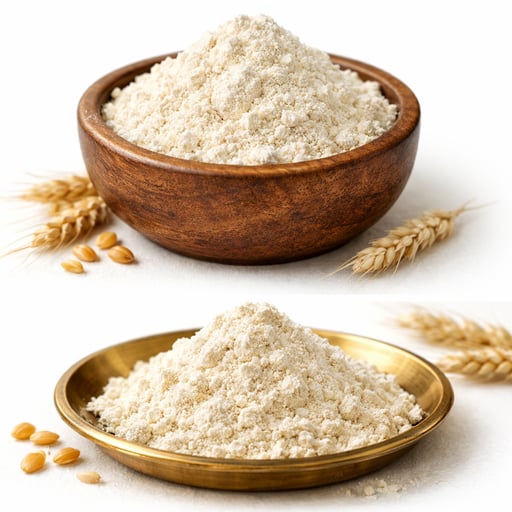
Vital wheat gluten
वाइटल व्हीट ग्लूटेन
Vital wheat gluten is a concentrated wheat protein used mainly in baking and as a meat substitute ingredient in vegan cooking. It is very high in protein and provides significant amounts of selenium, phosphorus, and iron.
Nutrition per 100g
Nutrient Breakdown
Key Nutrients(12)
% DV = % Daily Value (adult RDA, ICMR 2020). Values per 100g edible portion.
Use Vital wheat gluten in meal plans
17,000+ foods with real-time nutrient tracking, AI generation, and WhatsApp sharing.
Start FreeFree plan · No credit card
Common questions about Vital wheat gluten
How many calories are in 1 tablespoon of Vital wheat gluten?
1 tablespoon (10 g) of Vital wheat gluten has about 37 kcal, based on 370 kcal per 100 g.
How much protein is in Vital wheat gluten?
Vital wheat gluten provides about 75.2 g of protein per 100 g.
How is vital wheat gluten used in cooking?
It is mixed with water to form a dough and cooked to make meat substitute foods like seitan, or added to bread dough to improve texture and rise.
Is vital wheat gluten suitable for vegans?
Yes, it is plant-based and contains no animal products, making it suitable for vegan diets.
Does vital wheat gluten contain any allergens?
Yes, it contains gluten, which is a common allergen, so it is not suitable for those with gluten intolerance or celiac disease.
About Vital wheat gluten
Vital wheat gluten is a natural protein derived from wheat flour by removing starches, resulting in a highly concentrated protein powder. It originated in Western baking and vegan cuisines as an ingredient for improving bread elasticity and as a meat substitute called "seitan".
It provides very high protein content (about 75g per 100g) making it a popular choice for plant-based diets. It also contains significant minerals highlighted in verified data: selenium, phosphorus, and iron, which are important trace nutrients.
- Contains roughly 370 kcal per 100g, mostly from protein.
- Very low in fat and carbohydrates.
- Vegan-friendly and contains gluten (a common allergen).
Due to its gluten content, it is unsuitable for gluten-intolerant individuals. It is commonly used by mixing with water and cooking to make textured meat-like dishes or added to baked goods to improve texture.
Values per 100g edible portion.
Nutrition data is for reference only. Values may vary by preparation method, brand, and region. Full disclaimer
Similar foods
Browse all →Crude wheat germ
Sprouted wheat
Durum wheat
Wheat flour, whole-grain, soft wheat
Gluten, from wheat (vital wheat gluten)
Wheat flours, bread, unenriched
Crude wheat bran
Wheat, hard white