


 by Workfile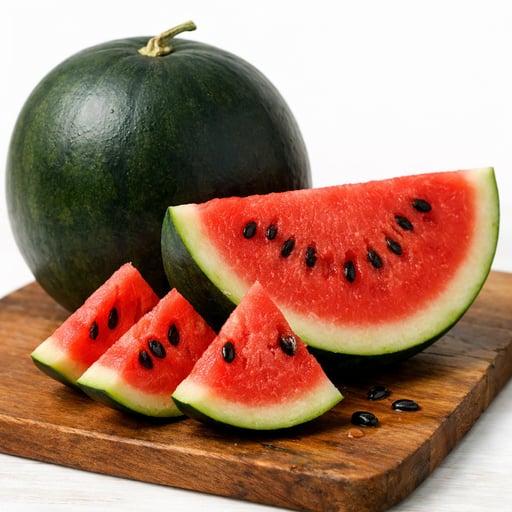
Water melon, dark green (sugar baby)
Tarbuj
Citrullus vulgaris
Also known as: Tormuj, Tarmuj, Watermelon, Tadbuj, Kallangadi, Hend wend
Watermelon is a refreshing, juicy fruit enjoyed in the summer heat, known for its high water content and natural sweetness.
Nutrition per 100ml
Nutrient Breakdown
Key Nutrients(13)
% DV = % Daily Value (adult RDA, ICMR 2020). Values per 100ml edible portion.
Use Water melon, dark green (sugar baby) in meal plans
17,000+ foods with real-time nutrient tracking, AI generation, and WhatsApp sharing.
Start FreeFree plan · No credit card
Common questions about Water melon, dark green (sugar baby)
How many calories are in 1 slice (~200g) of Water melon, dark green (sugar baby)?
1 slice (~200g) (200 ml) of Water melon, dark green (sugar baby) has about 41 kcal, based on 20 kcal per 100 ml.
How much protein is in Water melon, dark green (sugar baby)?
Water melon, dark green (sugar baby) provides about 0.6 g of protein per 100 ml.
How much sugar does Water melon, dark green (sugar baby) contain?
Water melon, dark green (sugar baby) has about 3.7 g of total sugars per 100 ml.
What is Sugar Baby watermelon commonly used for?
It is typically eaten fresh as a refreshing fruit or used in salads and juices.
Is Sugar Baby watermelon suitable for a vegan diet?
Yes, Sugar Baby watermelon is a plant-based fruit and suitable for vegan diets.
How should Sugar Baby watermelon be stored?
Keep whole watermelons in a cool place; after cutting, store covered in the refrigerator and consume within a few days.
About Water melon, dark green (sugar baby)
Watermelon, particularly the Sugar Baby variety, is a small and sweet fruit that has a deep green rind and vibrant red or pink flesh. It is revered for its high water content, making it an ideal summer treat to hydrate and cool down.
Typically enjoyed fresh, it can also be added to salads, smoothies, and desserts. Nutritionally, watermelon is low in calories, with a good amount of vitamin C and some vitamin A, along with potassium, which is essential for heart health.
This fruit is naturally low in fats and proteins, making it a great option for those looking to manage their weight. However, the high sugar content (mostly fructose) means that it should be consumed in moderation by individuals watching their sugar intake, such as those with diabetes.
Values per 100ml edible portion.
Nutrition data is for reference only. Values may vary by preparation method, brand, and region. Full disclaimer
Similar foods
Browse all →Water melon, pale green
Tarbuj
Musk melon, orange flesh
Kharbooja
Musk melon, yellow flesh
Kharbooja
Tender tinda
Tinda
Pulp tamarind
Imli
Pomegranate, maroon seeds
Anar
Dates, dry, dark brown
Khajur
Pummelo
Chakotra