


 by Workfile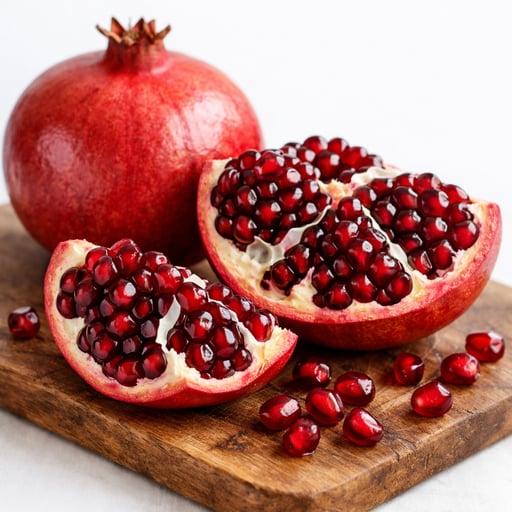
Pomegranate, maroon seeds
Anar
Punica granatum
Also known as: dalim, Bedana, Dadam, Dalimbari, Daan, Soh pomegranate
Seeds of pomegranate fruit with a maroon color, commonly eaten fresh or used in salads and garnishes.
Nutrition per 100g
Nutrient Breakdown
Key Nutrients(15)
% DV = % Daily Value (adult RDA, ICMR 2020). Values per 100g edible portion.
Use Pomegranate, maroon seeds in meal plans
17,000+ foods with real-time nutrient tracking, AI generation, and WhatsApp sharing.
Start FreeFree plan · No credit card
Common questions about Pomegranate, maroon seeds
How many calories are in 1 katori seeds (~100g) of Pomegranate, maroon seeds?
1 katori seeds (~100g) (100 g) of Pomegranate, maroon seeds has about 55 kcal, based on 55 kcal per 100 g.
How much protein is in Pomegranate, maroon seeds?
Pomegranate, maroon seeds provides about 1.3 g of protein per 100 g.
How much sugar does Pomegranate, maroon seeds contain?
Pomegranate, maroon seeds has about 10.9 g of total sugars per 100 g.
How are pomegranate seeds commonly used in cooking?
They are eaten fresh, added to salads, raitas, desserts, or used as garnishes in various Indian dishes.
Is pomegranate seed suitable for vegan diets?
Yes, pomegranate seeds are purely plant-based and suitable for vegan and vegetarian diets.
How should pomegranate seeds be stored?
Fresh pomegranate seeds should be refrigerated and consumed within a few days for best quality.
About Pomegranate, maroon seeds
Pomegranate seeds, often called arils, are the edible, juicy parts inside the pomegranate fruit, known for their vibrant maroon color and sweet-tart flavor. Commonly consumed fresh, these seeds are popular in Indian cuisine as toppings for salads, raitas, and desserts, as well as snacks.
Nutrition highlights: - Provides significant amounts of Chromium, contributing notably to daily intake. - Contains Vitamin K, important for blood clotting.
Pomegranate seeds are vegan and naturally low in fat, providing dietary fiber and moderate carbohydrates mostly from natural sugars. They can be included in a variety of meals and snacks, adding color and texture without processed ingredients.
- Suitable for a diverse range of diets including vegan and vegetarian.
- No common allergens present.
These attributes make pomegranate seeds a wholesome addition to a nutritious diet, consumed fresh or as part of recipes.
Values per 100g edible portion.
Nutrition data is for reference only. Values may vary by preparation method, brand, and region. Full disclaimer
Similar foods
Browse all →
Dried apricot
Khoomani

Processed apricot
Khoomani
Pomegranate
Mango, ripe, kesar
Aam
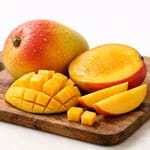
Mango, ripe, gulabkhas
Aam
Ripe jambu fruit
Jamun
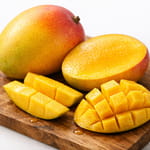
Mango, ripe, neelam
Aam
Pummelo
Chakotra