


 by Workfile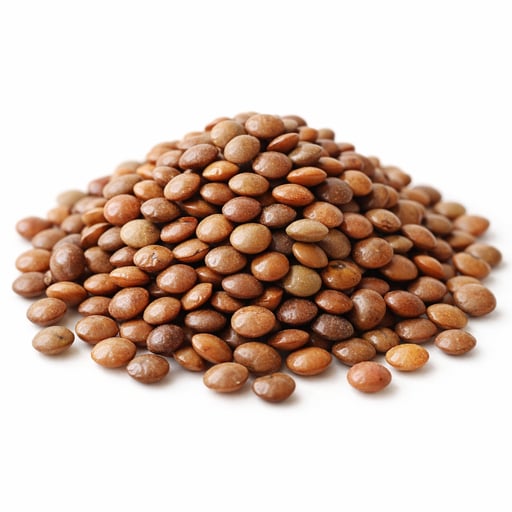
Whole masoor
Also known as: Whole Masoor, Masoor ki dal
Whole masoor is a type of whole red lentil commonly used in Indian cooking. It is a vegan pulse cooked into dals or stews, providing protein, dietary fiber, and minerals.
Nutrition per 100g
Nutrient Breakdown
Key Nutrients(13)
% DV = % Daily Value (adult RDA, ICMR 2020). Values per 100g edible portion.
Use Whole masoor in meal plans
17,000+ foods with real-time nutrient tracking, AI generation, and WhatsApp sharing.
Start FreeFree plan · No credit card
Common questions about Whole masoor
How many calories are in 1 bowl of Whole masoor?
1 bowl (342 g) of Whole masoor has about 185 kcal, based on 54 kcal per 100 g.
How much protein is in Whole masoor?
Whole masoor provides about 2.3 g of protein per 100 g.
How much sugar does Whole masoor contain?
Whole masoor has about 0.7 g of total sugars per 100 g.
How is whole masoor typically used in Indian cooking?
Whole masoor is commonly cooked into dals or lentil soups and served with rice or roti in Indian meals.
Is whole masoor suitable for vegans?
Yes, whole masoor is a plant-based pulse and is suitable for a vegan diet.
How should whole masoor be stored for best quality?
Store whole masoor in an airtight container in a cool, dry place away from moisture and pests to maintain quality.
About Whole masoor
Whole Masoor, also known as whole red lentils, is a staple pulse in many Indian households. It is distinct from split red lentils (masoor dal) by its intact skin which gives a firmer texture and slightly longer cooking time. This pulse is commonly used in dals, soups, and various traditional Indian dishes.
Nutrition highlights include moderate protein content and dietary fiber, with essential minerals like iron and potassium. It contains negligible fat and no vitamin B12 as a plant-based food. Some vitamin C and folate are present.
- Whole Masoor is vegan and gluten-free.
- Its fiber content supports digestion.
- Usually cooked soaked or direct boiled in water before consumption.
- Suitable for lunch and dinner meals, often paired with rice or rotis.
Whole Masoor is valued for its earthy flavor, nutritional balance, and versatility in Indian cuisine.
Values per 100g edible portion.
Nutrition data is for reference only. Values may vary by preparation method, brand, and region. Full disclaimer
Contains data from Indian Nutrient Databank (INDB), University of Edinburgh, licensed under CC BY 4.0, modified for presentation.
Report a data issueSimilar foods
Browse all →Whole moong
Brown lentil whole
Masur dal
Mixed dal
Lentil dal
Masoor dal
Yellowish lentil whole
Masur dal
Dal moong
Whole moth
Masala urad dal vada