


 by Workfile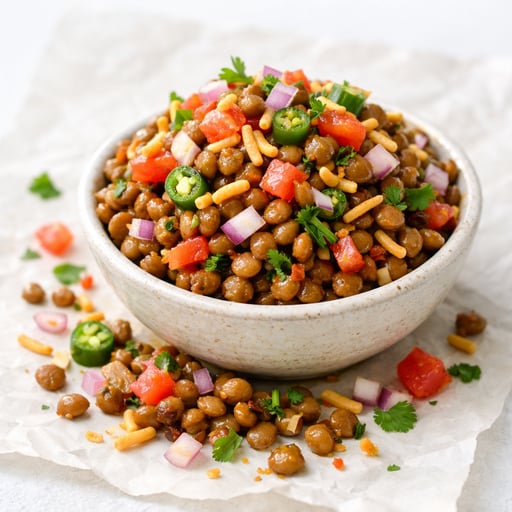
Masoor Dal Chaat
मसूर दाल चाट
Masoor Dal Chaat is a flavorful Indian snack made from cooked red lentils combined with spices, chopped vegetables, and tangy chutneys. It is a popular street food known for its vibrant taste and slightly crunchy texture.
Nutrition per 100g
Nutrient Breakdown
Key Nutrients(13)
% DV = % Daily Value (adult RDA, ICMR 2020). Values per 100g edible portion.
Use Masoor Dal Chaat in meal plans
17,000+ foods with real-time nutrient tracking, AI generation, and WhatsApp sharing.
Start FreeFree plan · No credit card
Common questions about Masoor Dal Chaat
How many calories are in 1 katori of Masoor Dal Chaat?
1 katori (100 g) of Masoor Dal Chaat has about 145 kcal, based on 145 kcal per 100 g.
How much protein is in Masoor Dal Chaat?
Masoor Dal Chaat provides about 9 g of protein per 100 g.
How much sugar does Masoor Dal Chaat contain?
Masoor Dal Chaat has about 2 g of total sugars per 100 g.
What is Masoor Dal Chaat typically made from?
It is made from cooked masoor dal (red lentils) mixed with spices, chopped vegetables, and tangy chutneys.
Is Masoor Dal Chaat suitable for vegetarians?
Yes, Masoor Dal Chaat is a vegetarian dish with no meat or eggs.
How should Masoor Dal Chaat be stored?
It is best consumed fresh but can be refrigerated for 1-2 days in an airtight container to maintain freshness and safety.
About Masoor Dal Chaat
Masoor Dal Chaat is a traditional Indian snack prepared by mixing cooked masoor dal (red lentils) with ingredients like chopped onions, tomatoes, green chilies, coriander, and various spices. This dish is particularly popular in Indian street food culture and is often served as a light snack or appetizer.
- Made from cooked masoor dal, providing a rich source of folate and dietary fiber as reflected in its nutrient profile.
- The dish combines both protein and carbohydrates with a moderate fat content due to added oil or ghee during preparation.
- Suitable for vegetarians, masoor dal chaat offers a nutritious option with a balance of macronutrients and essential minerals.
Its tangy and spicy flavor profile makes it a favorite during tea time or as an evening snack across many regions in India. The food is typically low in vitamins like A, C, and D, but stands out for its high folate and fiber contents, key nutritional highlights based on verified data.
Values per 100g edible portion.
Nutrition data is for reference only. Values may vary by preparation method, brand, and region. Full disclaimer
Similar foods
Browse all →Masala urad dal vada
Khakhra chaat
Masala vada
Chat masala
Whole masoor
Maa chaane ki dal
Spicy corn chaat
Moong dal halwa