


 by Workfile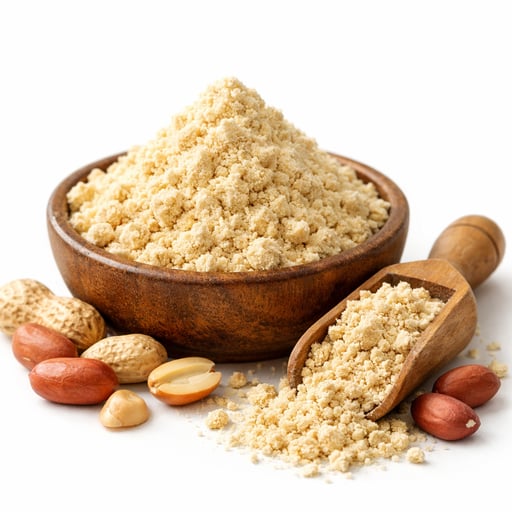
Peanut flour, low fat
मूंगफली का आटा (कम वसा)
Low fat peanut flour is ground from peanuts with reduced oil content, used in cooking and baking as a protein-rich ingredient.
Nutrition per 100g
Nutrient Breakdown
Key Nutrients(18)
% DV = % Daily Value (adult RDA, ICMR 2020). Values per 100g edible portion.
Use Peanut flour, low fat in meal plans
17,000+ foods with real-time nutrient tracking, AI generation, and WhatsApp sharing.
Start FreeFree plan · No credit card
Common questions about Peanut flour, low fat
How many calories are in oz of Peanut flour, low fat?
oz (28 g) of Peanut flour, low fat has about 121 kcal, based on 428 kcal per 100 g.
How much protein is in Peanut flour, low fat?
Peanut flour, low fat provides about 33.8 g of protein per 100 g.
What are common uses of low fat peanut flour in cooking?
It is used as a protein-rich ingredient in baking, sauces, and to add texture and flavor to various dishes.
Is low fat peanut flour suitable for vegan diets?
Yes, it is derived from peanuts with no animal ingredients, making it suitable for vegans.
How should low fat peanut flour be stored to maintain freshness?
Store it in an airtight container in a cool, dry place away from direct sunlight to preserve freshness and prevent rancidity.
About Peanut flour, low fat
Low fat peanut flour is produced by removing much of the oil from whole peanuts and then grinding the remaining solids into a fine powder. It is commonly used in cooking and baking, especially in recipes requiring high protein and low fat content.
This ingredient provides significant amounts of protein, fiber, and several essential minerals and vitamins. It is rich in copper and manganese, high in niacin (Vitamin B3), and provides good levels of phosphorus, zinc, and folate (Vitamin B9).
Being derived from peanuts, it contains notable peanut allergens and should be handled accordingly. It is vegan and typically dry and powdery in physical state.
- High protein content (approx. 46g/100g)
- Good source of dietary fiber
- Rich in essential minerals like copper, manganese, and zinc
This makes it suitable for vegetarian and vegan diets needing plant-based protein sources.
Values per 100g edible portion.
Nutrition data is for reference only. Values may vary by preparation method, brand, and region. Full disclaimer
Similar foods
Browse all →Defatted peanut flour
Peanut butter, smooth, reduced fat
Peanut butter, reduced sodium
Low-fat soy flour
Creamy peanut butter
Peanut spread, reduced sugar
Peanut butter, smooth, vitamin and mineral fortified
Peanut butter, chunky, vitamin and mineral fortified