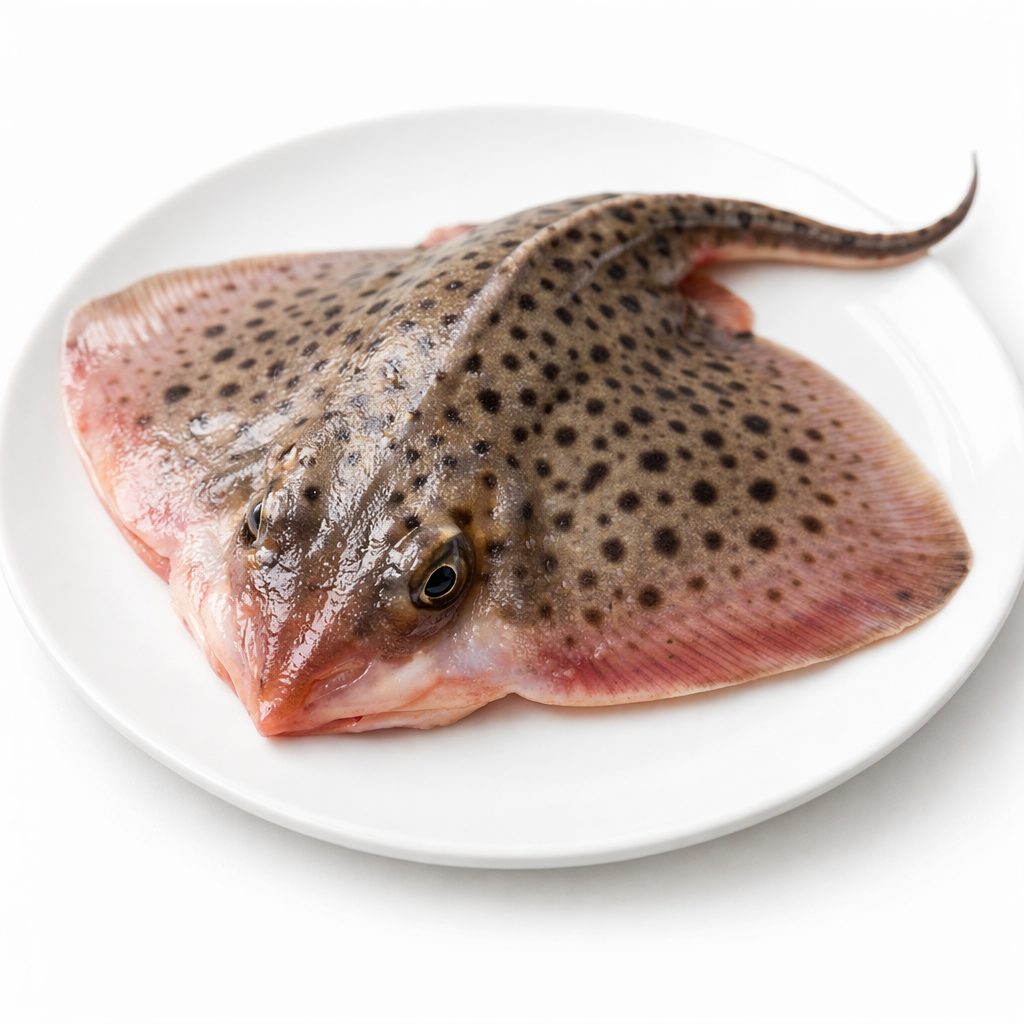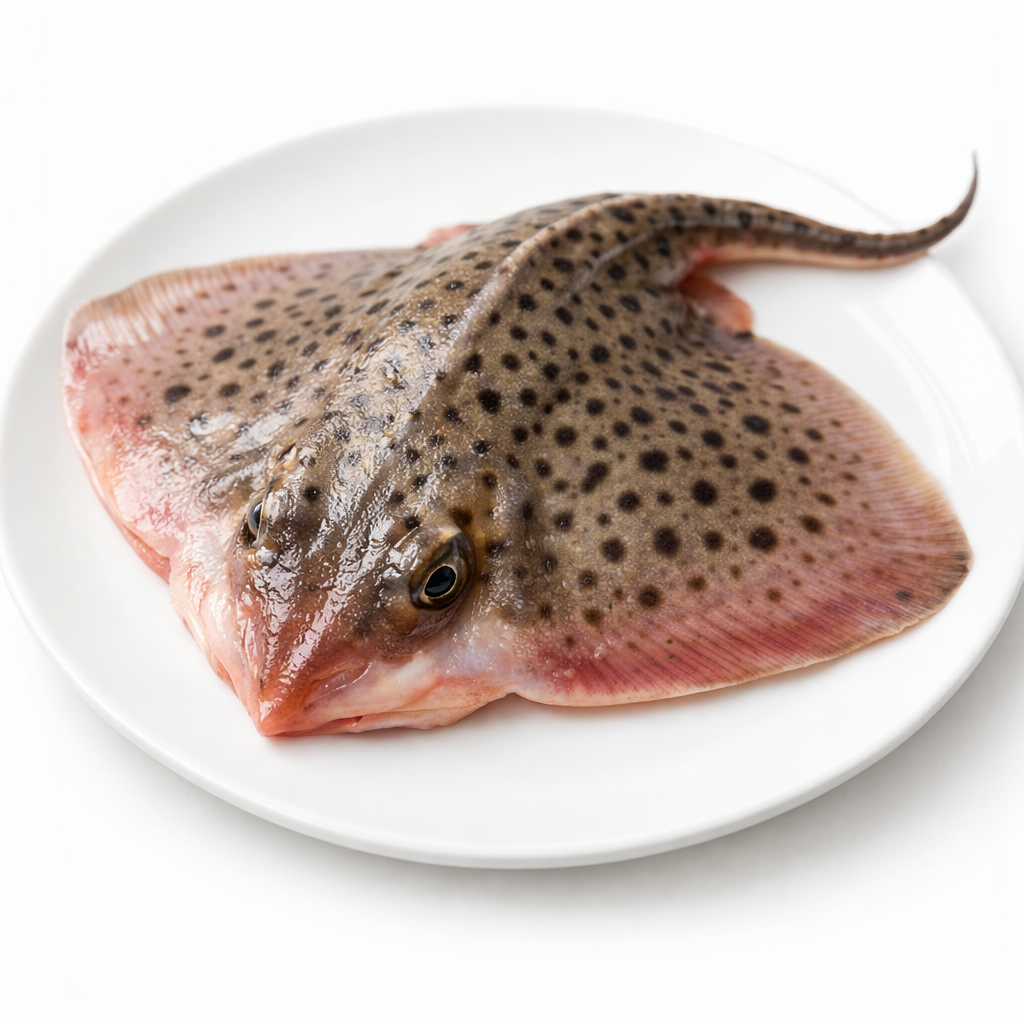
Rhina ancylostoma
Also known as: Bowmouth guitarfish, Shark ray, Mud skate, Bowmouthed Guitarfish, Sakshi, Lanj, Mun ultava, Pottila sora, Nella dindi, Ray, [Place of collection: Kochi]
Ray Fish, Bow Head, Spotted is a type of fish commonly consumed in coastal Indian regions, cooked by frying or grilling. It provides very high levels of Vitamin B6 and Biotin along with good protein content.
% DV = % Daily Value (adult RDA, ICMR 2020). Values per 100g edible portion.
Ray Fish, Bow Head, Spotted is a species of fish found in marine environments and is popular in coastal Indian cuisine. It is typically prepared by frying, grilling, or cooking in curries, known for its firm texture and mild flavor.
This fish is notable for being rich in Vitamin B6 and Biotin, supplying exceptionally high amounts of these nutrients per 100g serving. It also provides significant protein and selenium, which are essential for various bodily functions. The fish contains moderate phosphorus, supporting bone health.
Being a non-vegetarian seafood item, it fits well into non-veg diets and is usually consumed during lunch or dinner meals. It is low in carbohydrates and sugars, making it suitable for various dietary preferences with no added sugar.
9,000+ Indian foods with real-time nutrient tracking, AI generation, and WhatsApp sharing.
Start FreeFree plan · No credit card
Values per 100g edible portion.
Nutrition data is for reference only. Values may vary by preparation method, brand, and region. Full disclaimer
Kite fish
Raai fish
Stingray
Salmon
Guitar fish
Rani
Shark
Pangas