


 by Workfile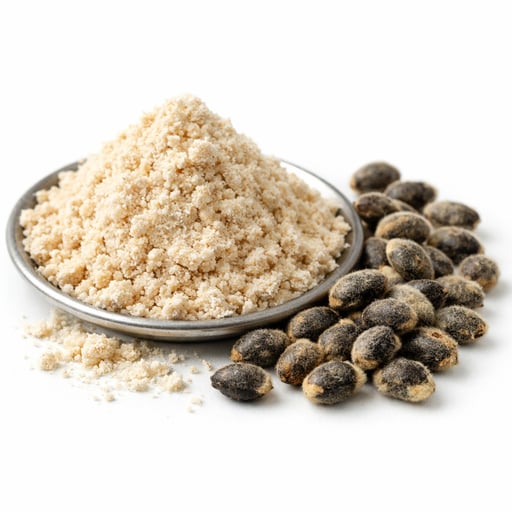
Seeds, cottonseed flour, low fat (glandless)
कपास के बीज का आटा, कम वसा (ग्लैंडलेस)
Also known as: कपास के बीज का आटा, कम वसा
Cottonseed flour is a powder made by grinding glandless cotton seeds, commonly used as a protein-rich ingredient in animal feeds and some regional food preparations.
Nutrition per 100g
Nutrient Breakdown
Key Nutrients(20)
% DV = % Daily Value (adult RDA, ICMR 2020). Values per 100g edible portion.
Use Seeds, cottonseed flour, low fat (glandless) in meal plans
17,000+ foods with real-time nutrient tracking, AI generation, and WhatsApp sharing.
Start FreeFree plan · No credit card
Common questions about Seeds, cottonseed flour, low fat (glandless)
How many calories are in oz of Seeds, cottonseed flour, low fat (glandless)?
oz (28 g) of Seeds, cottonseed flour, low fat (glandless) has about 94 kcal, based on 332 kcal per 100 g.
How much protein is in Seeds, cottonseed flour, low fat (glandless)?
Seeds, cottonseed flour, low fat (glandless) provides about 49.8 g of protein per 100 g.
What are common culinary uses for cottonseed flour?
Cottonseed flour is used primarily as a protein-rich ingredient in animal feed and some specialty regional recipes; it is not commonly used in everyday Indian cooking.
Is cottonseed flour suitable for vegan diets?
Yes, cottonseed flour is plant-based and suitable for vegan diets.
How should cottonseed flour be stored?
Store in an airtight container in a cool, dry place to maintain freshness and prevent moisture absorption.
About Seeds, cottonseed flour, low fat (glandless)
Cottonseed flour is produced by grinding the seeds of the cotton plant after removing the fatty gland components, resulting in a low-fat flour.
- It is known for its high protein content and is often used in blends to improve nutritional quality.
- This flour is also rich in magnesium, phosphorus, thiamine (B1), zinc, copper, folate (B9), and iron, making it a nutrient-dense ingredient.
- It is generally considered vegan and free of common allergens like gluten, dairy, nuts, and soy.
Due to its distinct taste and high nutrient density, it is mainly used in specialized food products and animal nutrition rather than typical household cooking.
Values per 100g edible portion.
Nutrition data is for reference only. Values may vary by preparation method, brand, and region. Full disclaimer
Similar foods
Browse all →Seeds, cottonseed flour, partially defatted (glandless)
Seeds, sesame flour, low-fat
Seeds, cottonseed meal, partially defatted (glandless)
Seeds, sesame flour, high-fat
Seeds, cottonseed kernels, roasted (glandless)
Seeds, sunflower seed flour, partially defatted
बीज, सूरजमुखी का आटा, आंशिक रूप से फैट निकाला हुआ
Seeds, sesame flour, partially defatted
Flaxseed seeds