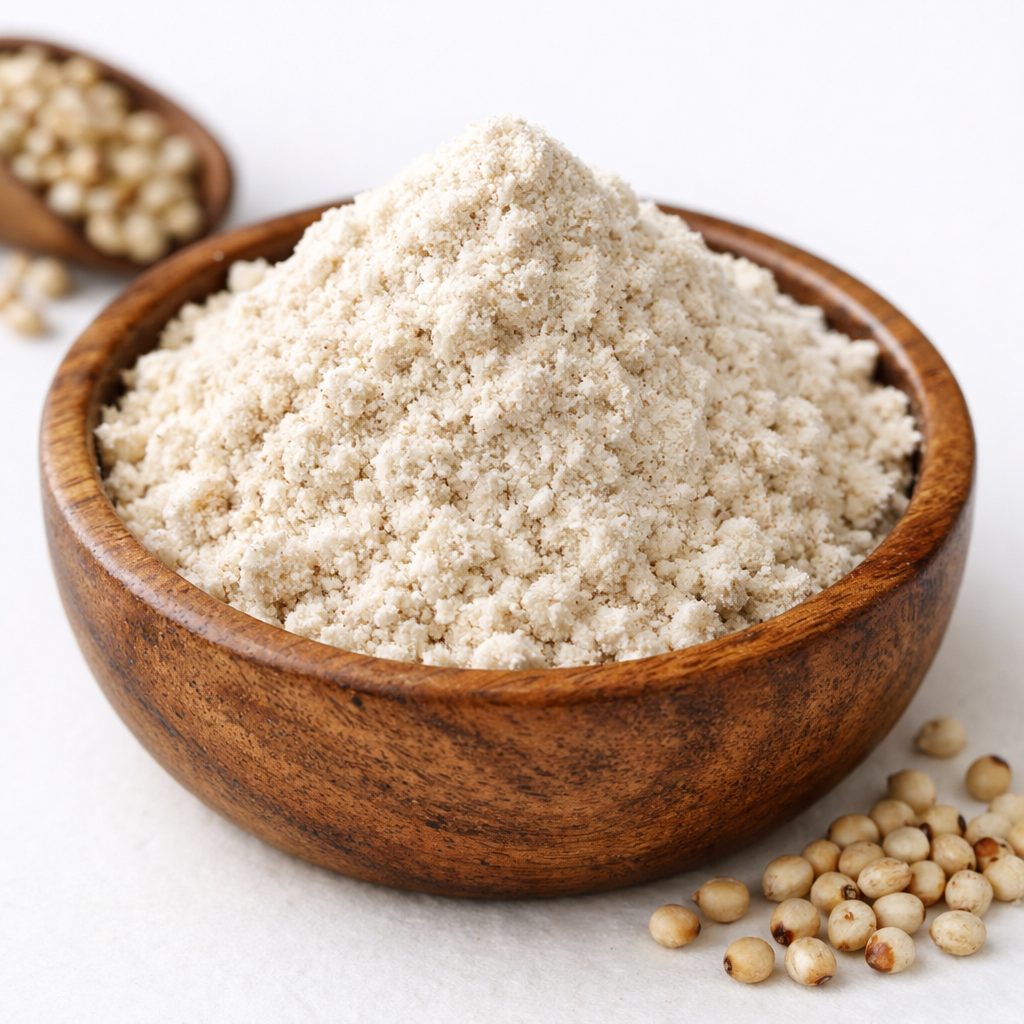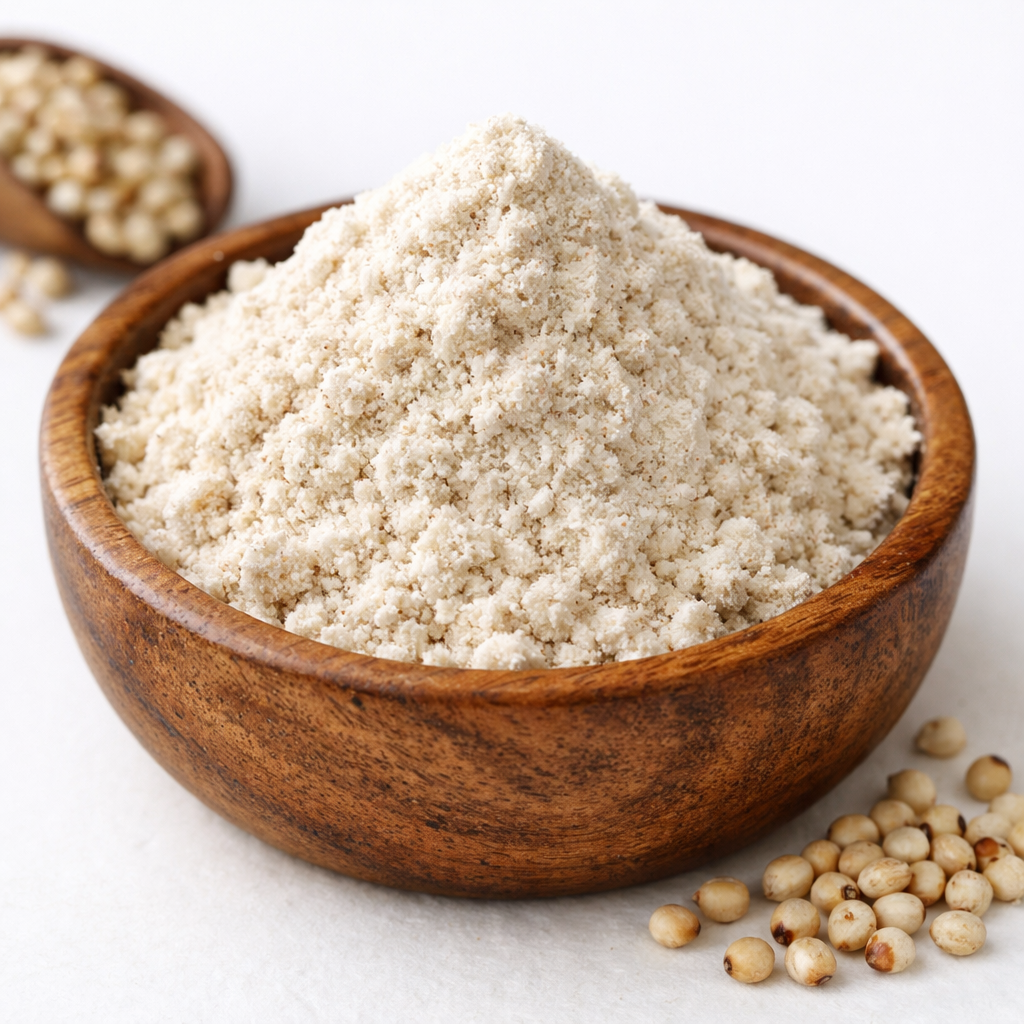
ज्वार का आटा
Whole-grain sorghum flour, also known as jowar atta, is a common cereal flour used widely in Indian cooking for making rotis and other traditional breads. It is rich in manganese, phosphorus, magnesium, niacin, and dietary fiber.
% DV = % Daily Value (adult RDA, ICMR 2020). Values per 100g edible portion.
Sorghum flour, made from whole-grain sorghum (jowar), is a staple cereal flour in many parts of India, especially in semi-arid regions. It is commonly ground at home or purchased from stores and used primarily to make flatbreads like rotis, bhakris, and porridge. The grain is valued for its drought resistance and high nutritional content.
Nutritionally, it provides significant amounts of manganese, phosphorus, magnesium, and niacin (vitamin B3), which contribute to its micronutrient profile. It also contains good dietary fiber, supporting digestive health. Being a gluten-free grain, it is suitable for those with gluten intolerance or celiac disease.
This flour is vegan and unprocessed, making it a minimally refined cereal option. It can be used in breakfast, lunch, dinner, and snacks, often paired with lentils and vegetables for balanced meals.
9,000+ Indian foods with real-time nutrient tracking, AI generation, and WhatsApp sharing.
Start FreeFree plan · No credit card
Values per 100g edible portion.
Nutrition data is for reference only. Values may vary by preparation method, brand, and region. Full disclaimer
Refined sorghum flour
ज्वार का आटा (शुद्ध, परिष्कृत)
Sorghum grain
ज्वार दाना
Whole-grain corn flour
Whole-grain wheat flour
Whole-grain cornmeal
Whole-grain (includes foods for usda's food distribution program) wheat flour
Barley malt flour
Whole-grain triticale flour