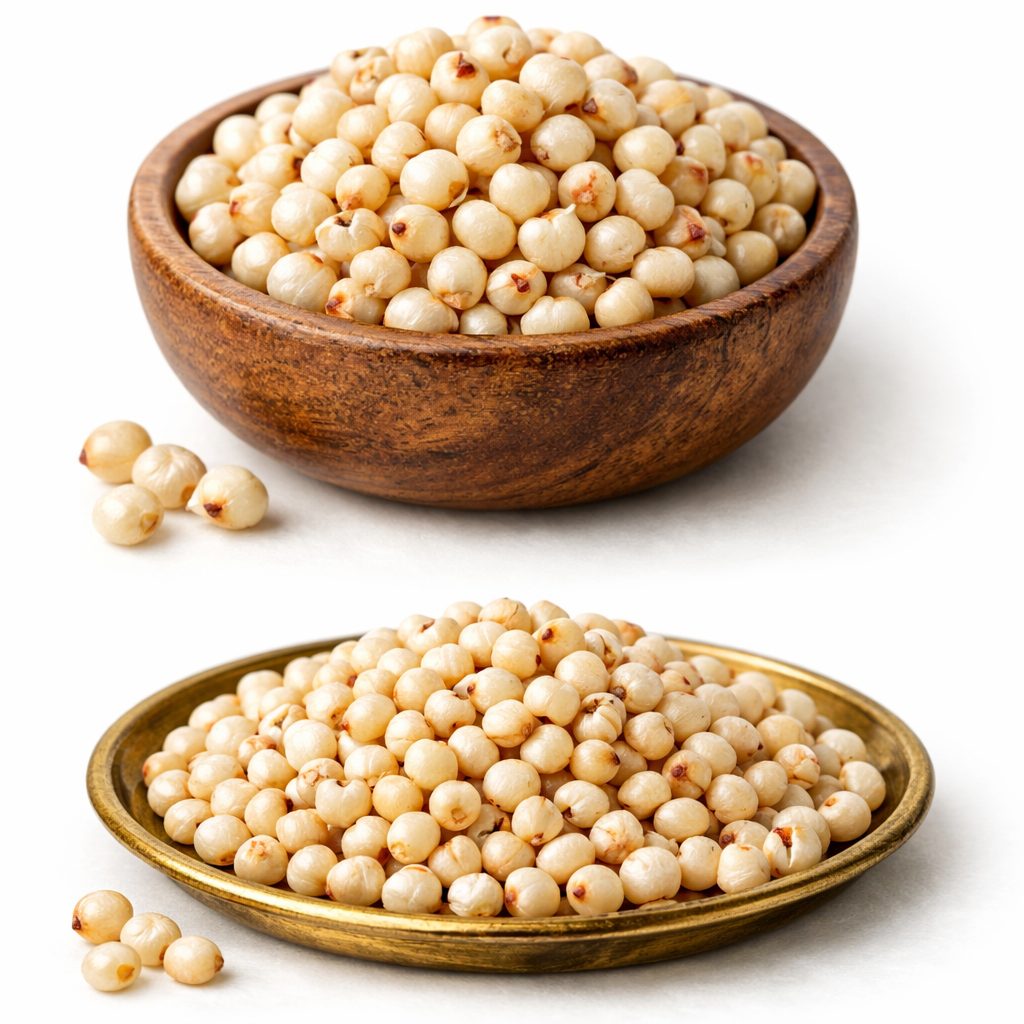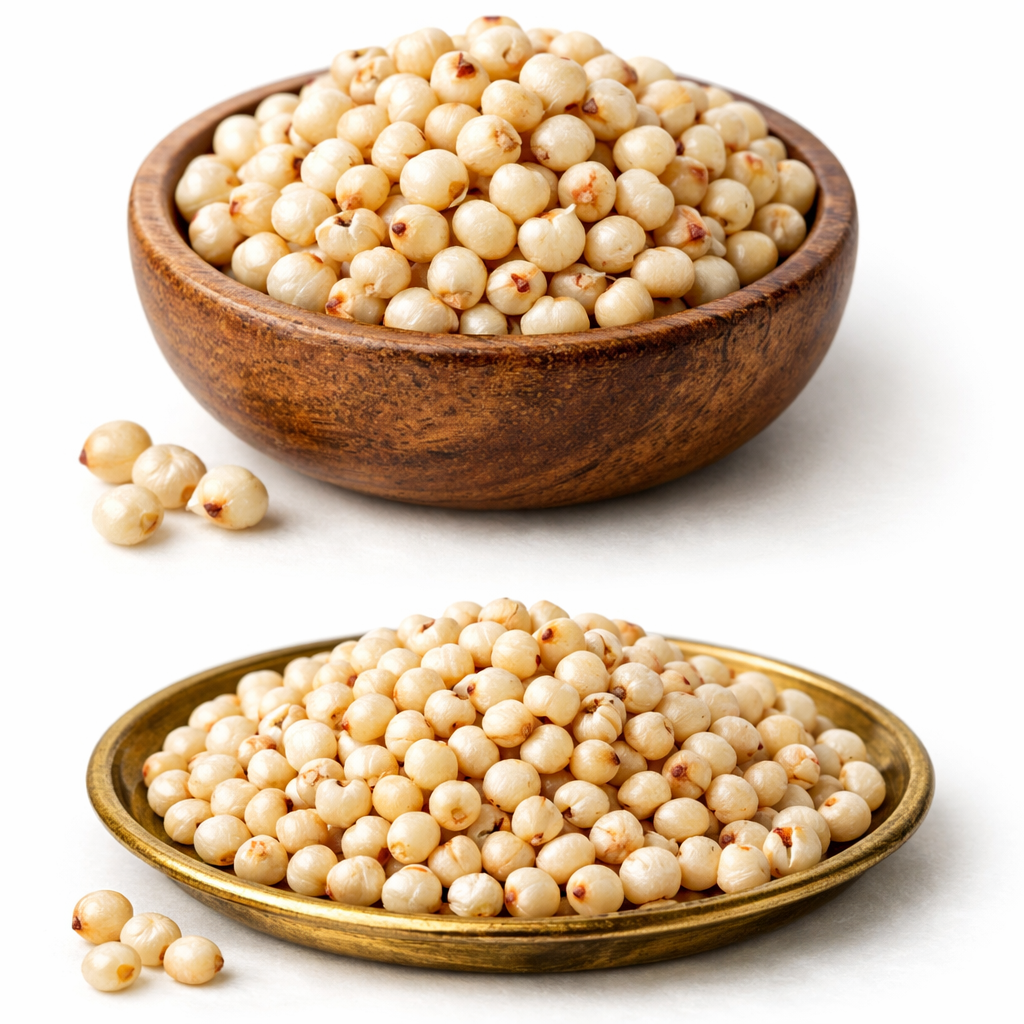
ज्वार दाना
Sorghum spp.
Sorghum grain is a hardy cereal used extensively in Indian cuisine, especially in rural and semi-arid regions. It is typically ground into flour for making traditional flatbreads like rotis or consumed as whole grain after cooking.
% DV = % Daily Value (adult RDA, ICMR 2020). Values per 100g edible portion.
Sorghum grain, also known as 'jowar' in Hindi, is an important cereal crop grown in India and many other countries. It is valued for its resilience to dry conditions and is a staple in many Indian households, especially in the western and central regions.
Typically, the whole grains are milled into flour, which is then used to prepare traditional breads such as jowar rotis. These flatbreads are gluten-free and provide a nutritious alternative to wheat.
Nutritionally, sorghum grain is rich in magnesium, manganese, phosphorus, selenium, vitamin B6, and thiamine (B1). It also provides a good source of dietary fiber and niacin (vitamin B3). These nutrients contribute to its role as a wholesome cereal option.
Sorghum is vegan and free from common allergens such as gluten (unless contaminated), dairy, nuts, and soy. It fits well in diverse Indian meal patterns.
9,000+ Indian foods with real-time nutrient tracking, AI generation, and WhatsApp sharing.
Start FreeFree plan · No credit card
Values per 100g edible portion.
Nutrition data is for reference only. Values may vary by preparation method, brand, and region. Full disclaimer
Whole-grain sorghum flour
ज्वार का आटा
Refined sorghum flour
ज्वार का आटा (शुद्ध, परिष्कृत)
Yellow corn grain
White corn grain
Rye grain
Dry bulgur
Whole-grain cornmeal
Durum wheat