


 by Workfile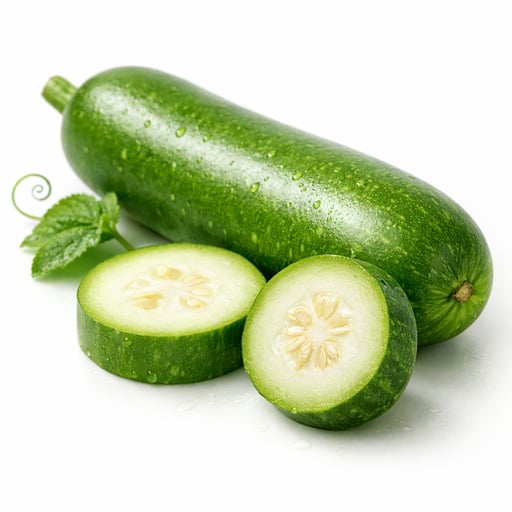
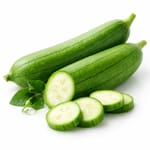
Bottle gourd, elongate, dark green
Lowki
Lagenaria vulgaris
Also known as: Jatilao, Lau, Calabash, White flowered gourd, Dudhi, Sorekai, Zeth aal
Bottle gourd (lauki) is a common Indian vegetable used in various cooked dishes such as curries and stews. It has a mild flavor and contains folate (vitamin B9) as a significant nutrient.
Nutrition per 100g
Nutrient Breakdown
Key Nutrients(13)
% DV = % Daily Value (adult RDA, ICMR 2020). Values per 100g edible portion.
Use Bottle gourd, elongate, dark green in meal plans
17,000+ foods with real-time nutrient tracking, AI generation, and WhatsApp sharing.
Start FreeFree plan · No credit card
Common questions about Bottle gourd, elongate, dark green
How many calories are in 1 katori cooked sabzi of Bottle gourd, elongate, dark green?
1 katori cooked sabzi (150 g) of Bottle gourd, elongate, dark green has about 19 kcal, based on 13 kcal per 100 g.
How much protein is in Bottle gourd, elongate, dark green?
Bottle gourd, elongate, dark green provides about 0.5 g of protein per 100 g.
How much sugar does Bottle gourd, elongate, dark green contain?
Bottle gourd, elongate, dark green has about 0.4 g of total sugars per 100 g.
How is bottle gourd typically used in cooking?
Bottle gourd is commonly used in Indian cooking for curries, soups, stews, and stir-fries. It can be cooked with spices or combined with lentils.
What dietary type does bottle gourd belong to?
Bottle gourd is a vegan vegetable and contains no animal products.
How should bottle gourd be stored?
Store bottle gourd in a cool, dry place or refrigerated in a plastic bag. Use within a few days for best freshness.
About Bottle gourd, elongate, dark green
Bottle gourd, also known as lauki or ghiyā in Hindi, is a popular vegetable in Indian cuisine. It is typically cooked as part of dals, curries, and soups, offering a mild and slightly sweet taste.
Nutritionally, it provides a significant amount of folate (vitamin B9), contributing 21% of the daily value per 100g edible portion. Other nutrients include low calories, minimal protein, carbohydrates, and fat, along with small amounts of minerals such as calcium, potassium, and iron.
- Commonly consumed cooked but also eaten raw in salads in some regional dishes.
- Fits well in vegan diets with no common allergens.
- Its low-calorie content makes it a light addition to meals.
This vegetable is widely cultivated across India and is appreciated for its versatility and nutritional contribution, especially folate.
Values per 100g edible portion.
Nutrition data is for reference only. Values may vary by preparation method, brand, and region. Full disclaimer
Similar foods
Browse all →
Bottle gourd, elongate, pale green
Lowki
Bottle gourd, round, pale green
Lowki
Ridge gourd
Torai
Snake gourd, long, dark green
Chachinda
Snake gourd, long, pale green
Chachinda
Ridge gourd, smooth skin
Torai
Pumpkin, green, cylindrical
Kaddu
Bitter gourd, jagged, smooth ridges, elongate
Karela