


 by Workfile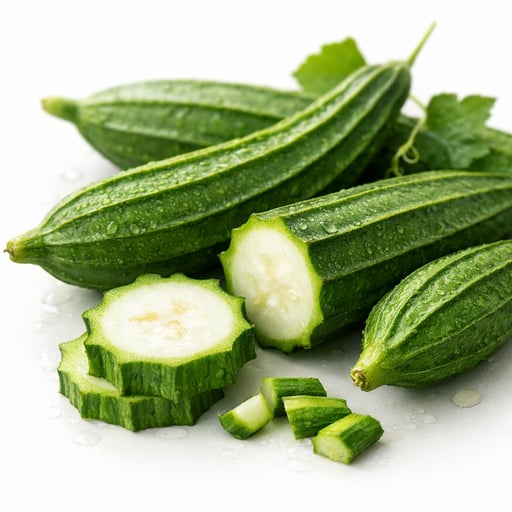
Ridge gourd
Torai
Luffa acutangula
Also known as: Jikaa, Jhinge, Luffa, Loofah, Turia, Heeraikai, Turrel
Ridge gourd, or 'Turai', is a nutritious green vegetable commonly used in Indian cooking. It has a mild flavor and is often prepared in curries or stir-fries.
Nutrition per 100g
Nutrient Breakdown
Key Nutrients(14)
% DV = % Daily Value (adult RDA, ICMR 2020). Values per 100g edible portion.
Use Ridge gourd in meal plans
17,000+ foods with real-time nutrient tracking, AI generation, and WhatsApp sharing.
Start FreeFree plan · No credit card
Common questions about Ridge gourd
How many calories are in 1 katori cooked sabzi of Ridge gourd?
1 katori cooked sabzi (150 g) of Ridge gourd has about 20 kcal, based on 13 kcal per 100 g.
How much protein is in Ridge gourd?
Ridge gourd provides about 0.9 g of protein per 100 g.
How much sugar does Ridge gourd contain?
Ridge gourd has about 0.6 g of total sugars per 100 g.
How is ridge gourd commonly used in cooking?
Ridge gourd is usually cooked and used in curries, stir-fries, dal, and soup preparations in Indian cuisine.
Is ridge gourd suitable for vegan diets?
Yes, ridge gourd is a plant-based food and is suitable for vegan diets.
How should ridge gourd be stored to keep it fresh?
Store ridge gourd in the refrigerator's vegetable compartment, wrapped loosely in a plastic bag, and use within a few days for best freshness.
About Ridge gourd
Ridge gourd, known as Torai in Hindi, is a popular vegetable in Indian cuisine, valued for its delicate flavor and nutritional benefits. It is commonly cooked in various dishes, including curries and stir-fries, where it absorbs spices well while maintaining its unique texture.
Notably low in calories, ridge gourd provides a range of vitamins and minerals. It is a good source of vitamin A and vitamin C, which contribute to skin health and immunity. Additionally, it contains dietary fiber, supporting digestion.
This vegetable is suitable for various diets, particularly for those seeking low-calorie options. It is also a good choice for diabetics due to its low glycemic index and moderate sugar content. Enjoy it regularly as part of a balanced diet.
- Low in Calories: Approximately 20 kcal per 100g.
- Rich in Nutrients: Provides essential vitamins and minerals, including potassium and calcium.
Values per 100g edible portion.
Nutrition data is for reference only. Values may vary by preparation method, brand, and region. Full disclaimer
Similar foods
Browse all →
Ridge gourd, smooth skin
Torai
Bottle gourd, elongate, dark green
Lowki
Bottle gourd, elongate, pale green
Lowki
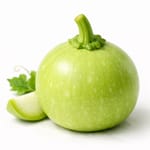
Bottle gourd, round, pale green
Lowki
Bitter gourd, jagged, smooth ridges, elongate
Karela
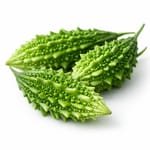
Bitter gourd, jagged, teeth ridges, elongate
Karela
Bitter gourd, jagged, teeth ridges, short
Karela
Short snake gourd
Chachinda